An heirloom watch survives through consistent, restrained care—not constant polishing or unnecessary restoration. Keep it clean and dry, store it safely, follow the maker’s service guidance, and preserve every receipt, replaced component, and ownership record. Just as important, choose repair decisions that protect originality rather than making an older watch look artificially new.
A watch does not need to be rare or expensive to become an heirloom. Personal history may matter more to a family than auction value. Yet sentimental and market value both benefit from the same discipline: reliable maintenance, careful documentation, appropriate insurance, and a clear plan for the next owner.
Key takeaways
- Follow the manufacturer’s guidance and the watch’s condition rather than relying on one universal service interval.
- Protect watches from water, impact, magnetism, extreme temperatures, and improvised at-home repairs.
- Keep receipts, service reports, appraisal records, warranty materials, and original components together.
- Ask a repairer to prioritize function and originality, especially before replacing visible vintage parts or polishing a case.
- Give the next owner practical instructions and the watch’s story, not just the watch itself.
What makes a watch suitable for generations of ownership?
Heirloom potential begins with meaning, but construction and support affect whether a watch remains usable. A durable case, serviceable movement, available parts, and a repair network can make long-term ownership easier. Mechanical watches are often associated with inheritance because skilled watchmakers can disassemble and service their movements. Quartz and solar-powered watches can also carry family history, although the future availability of electronic modules may be less predictable.
Condition should not be confused with perfection. A lightly scratched case worn at weddings, anniversaries, and ordinary workdays may have more family significance than a flawless watch kept in a safe. Honest wear can also be preferable to aggressive refinishing, which may soften case edges, reduce engraving depth, or alter the original surface.
Nor should an heirloom automatically be treated as an investment. Fashion, collector preferences, originality, rarity, condition, and the market all influence resale value. Maintenance can help preserve utility and condition, but it cannot guarantee appreciation.
Build good habits into everyday wear
Most preservation happens between professional services. A few repeatable habits prevent more damage than elaborate routines.
Keep water resistance in perspective
Water resistance is not permanent. Gaskets age, crowns can be left unscrewed, and impact can compromise a seal. Observe the depth rating and operating instructions for the specific model, and never operate pushers or adjust the crown underwater unless the manufacturer explicitly permits it.
Have water resistance tested before swimming with a watch that has been stored for a long time, recently sustained an impact, or has an uncertain service history. Vintage pieces deserve particular caution because their original rating may no longer reflect their present condition. If moisture appears beneath the crystal, stop wearing the watch and seek professional attention promptly.
Limit impacts, temperature extremes, and magnetism
Remove a watch for activities involving repeated shock, heavy tools, or a high chance of striking a hard surface. Avoid leaving it in a hot vehicle or placing it close to strong magnets found in some speakers, bag clasps, device accessories, and workshop equipment. Magnetism can disrupt mechanical timekeeping, though a watchmaker can often diagnose and correct it.
After exposure to salt water, rinse an appropriately water-resistant watch in fresh water according to the maker’s instructions. Wipe cases and bracelets with a soft, clean cloth. Do not introduce solvents, abrasive cleaners, toothpaste, or household metal polish.
Store it dry, stable, and separate
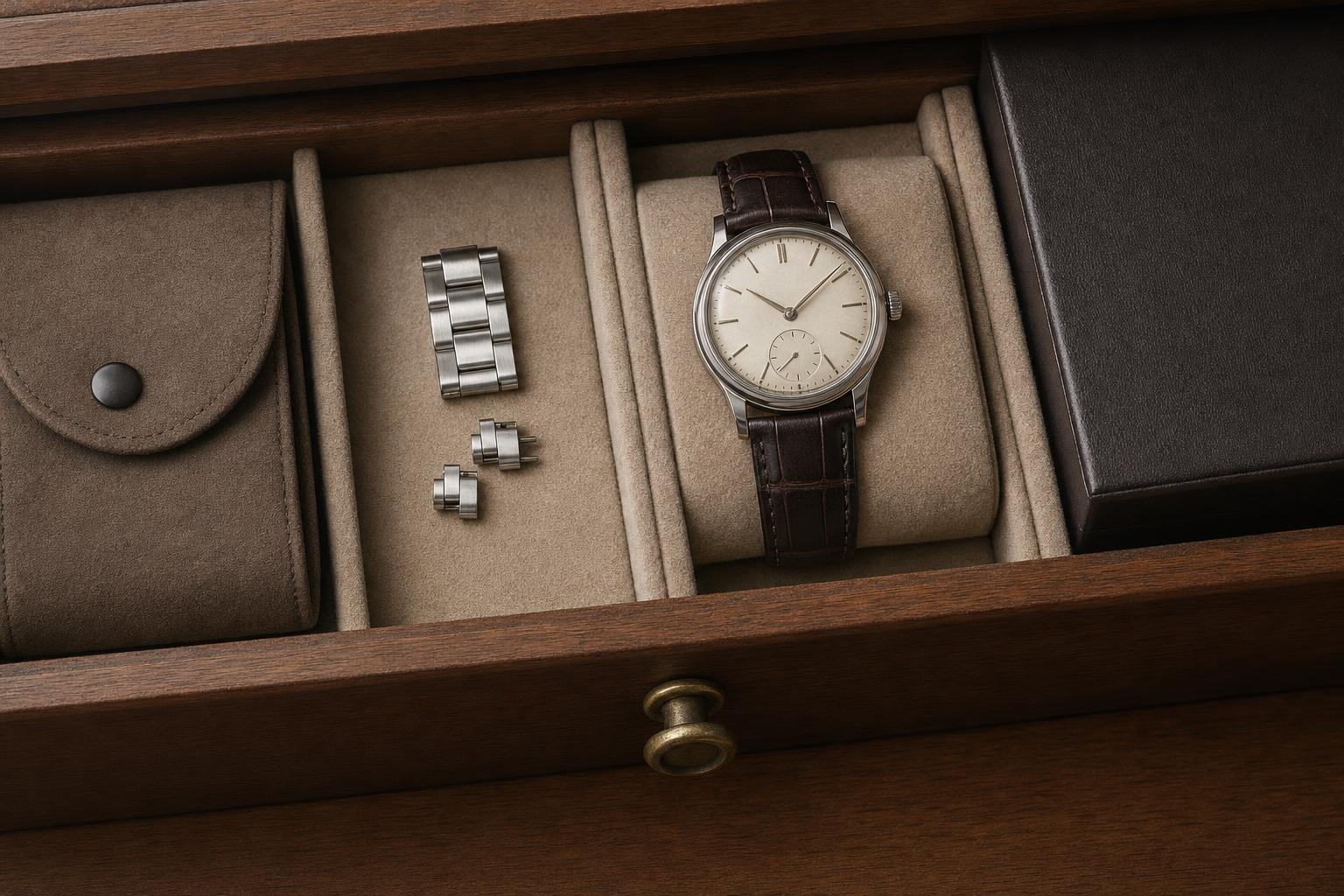
Keep an unworn watch in a dry location away from direct sunlight and large temperature swings. A lined compartment or soft pouch helps prevent contact with other jewelry. Do not force a leather strap around a cushion that is too large; prolonged tension can crease the strap or stress spring bars.
For mechanical watches, a powered winder is a convenience rather than a universal preservation requirement. It can be useful for a complicated calendar that is difficult to reset, but it also keeps the movement running and accumulating wear. A simple watch can usually rest when it is not being worn.
Set a service schedule that fits the movement
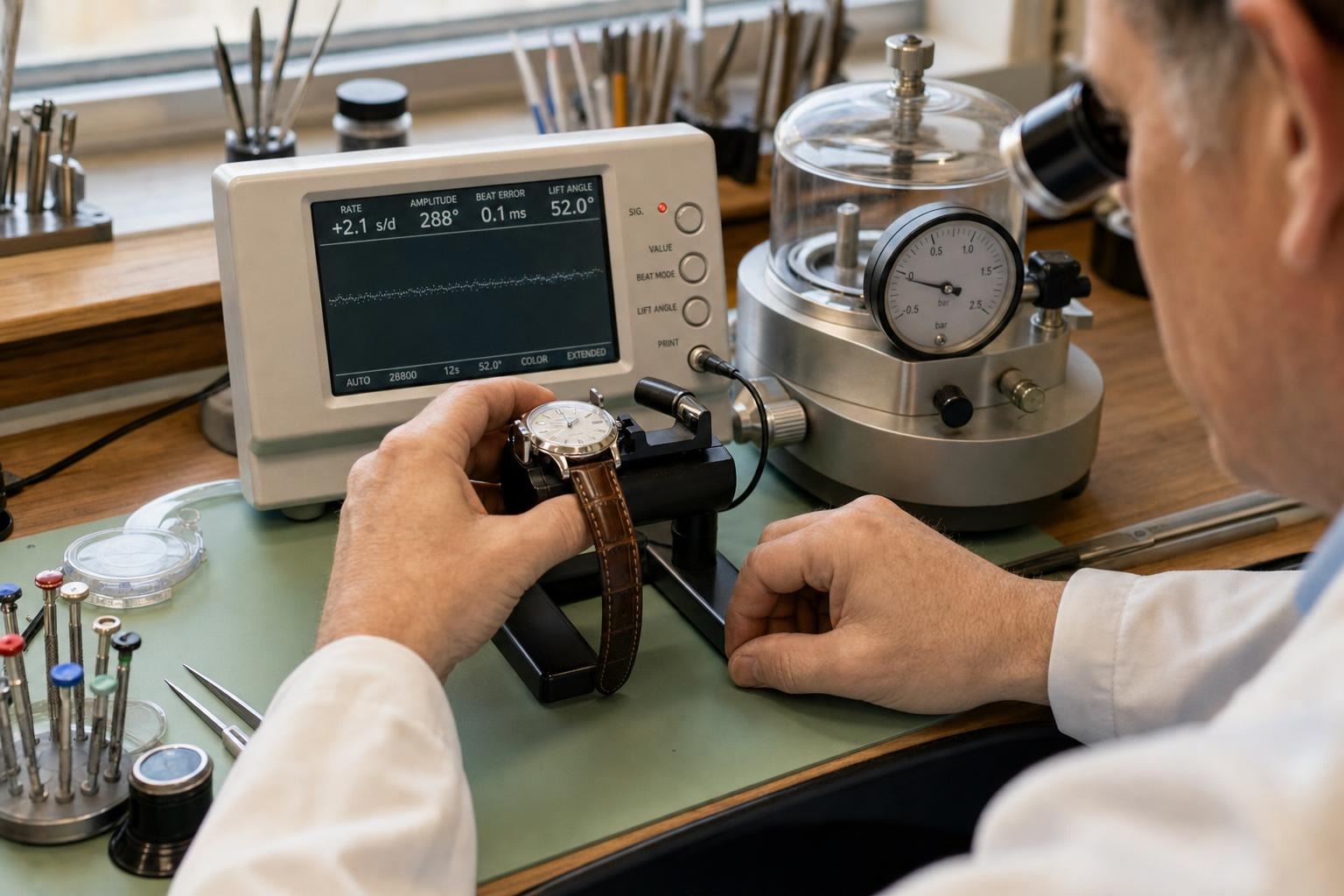
There is no responsible interval for every watch. Manufacturer recommendations differ, and usage, climate, water exposure, movement design, and complication all matter. Official care instructions should be the starting point; for example, Rolex advises owners to consult its service guidance for their particular watch.
Use the following ranges as planning prompts, not substitutes for model-specific advice:
| Watch type | Maintenance planning | Reasons to seek earlier inspection | |---|---|---| | Manual or automatic mechanical | Many modern makers suggest complete service within a broad range of roughly 5–10 years | Erratic timekeeping, low power reserve, rough winding, unusual noise, moisture, or impact | | Mechanical watch with major complications | Ask the manufacturer or a specialist familiar with the exact caliber | Calendar, chronograph, repeater, or other function fails to engage or reset correctly | | Standard quartz | Replace the battery when required; discuss full movement maintenance based on age and condition | Stopped seconds hand, battery warning behavior, moisture, or suspected leakage | | Solar or rechargeable quartz | Follow the maker’s charging and storage instructions; inspect when performance declines | Failure to hold charge, irregular operation, or long-term dark storage | | Vintage watch | Establish a baseline inspection with a qualified specialist; then use condition-led intervals | Unknown history, deteriorated seals, rust, unstable timing, or resistance at the crown |
A complete mechanical service commonly involves disassembly, cleaning, inspection, lubrication, reassembly, adjustment, and testing. The scope should be confirmed before work begins. Water-resistance testing, refinishing, bracelet repair, and replacement parts may be separate decisions.
Do not wait for a watch to grind to a halt if it shows persistent symptoms. Old or displaced lubricant can increase wear. Conversely, opening a healthy watch too frequently introduces cost and handling risk. The goal is timely intervention, not maximum intervention.
Protect provenance with organized records
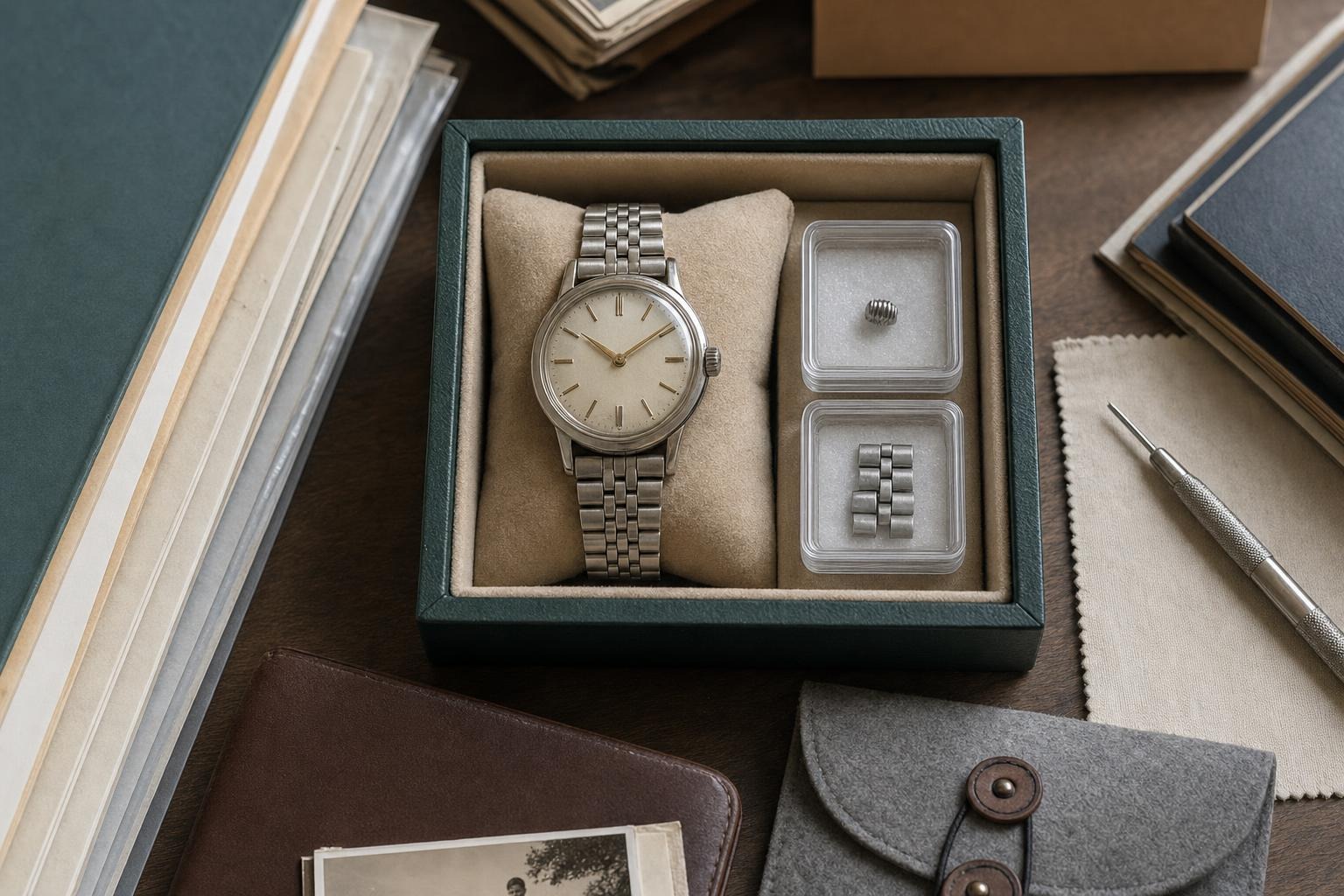
Documentation connects the object to its history. Keep the original sales receipt, warranty card, reference and serial information, instruction materials, service invoices, appraisal reports, and relevant correspondence. Photograph the watch from several angles, including distinguishing marks, but store serial-number images privately.
A useful service invoice identifies the date, provider, reported symptoms, work completed, test results when supplied, and components replaced. Ask for significant original parts to be returned when policy and exchange programs allow it. Store those parts with a note explaining why they were removed; even a damaged dial, crown, bezel, or bracelet link may be relevant to future evaluation.
Create two records: a physical file stored securely and an encrypted digital backup. The digital copy helps after theft, fire, or loss, while the paper materials retain their original form. Update photographs and records after every service, appraisal, strap change, or ownership transfer.
Family provenance can be recorded without embellishment. Note who purchased the watch, approximately when, and the occasions on which it was worn. Label uncertain details as family recollections rather than verified facts.
Choose repairs that respect originality
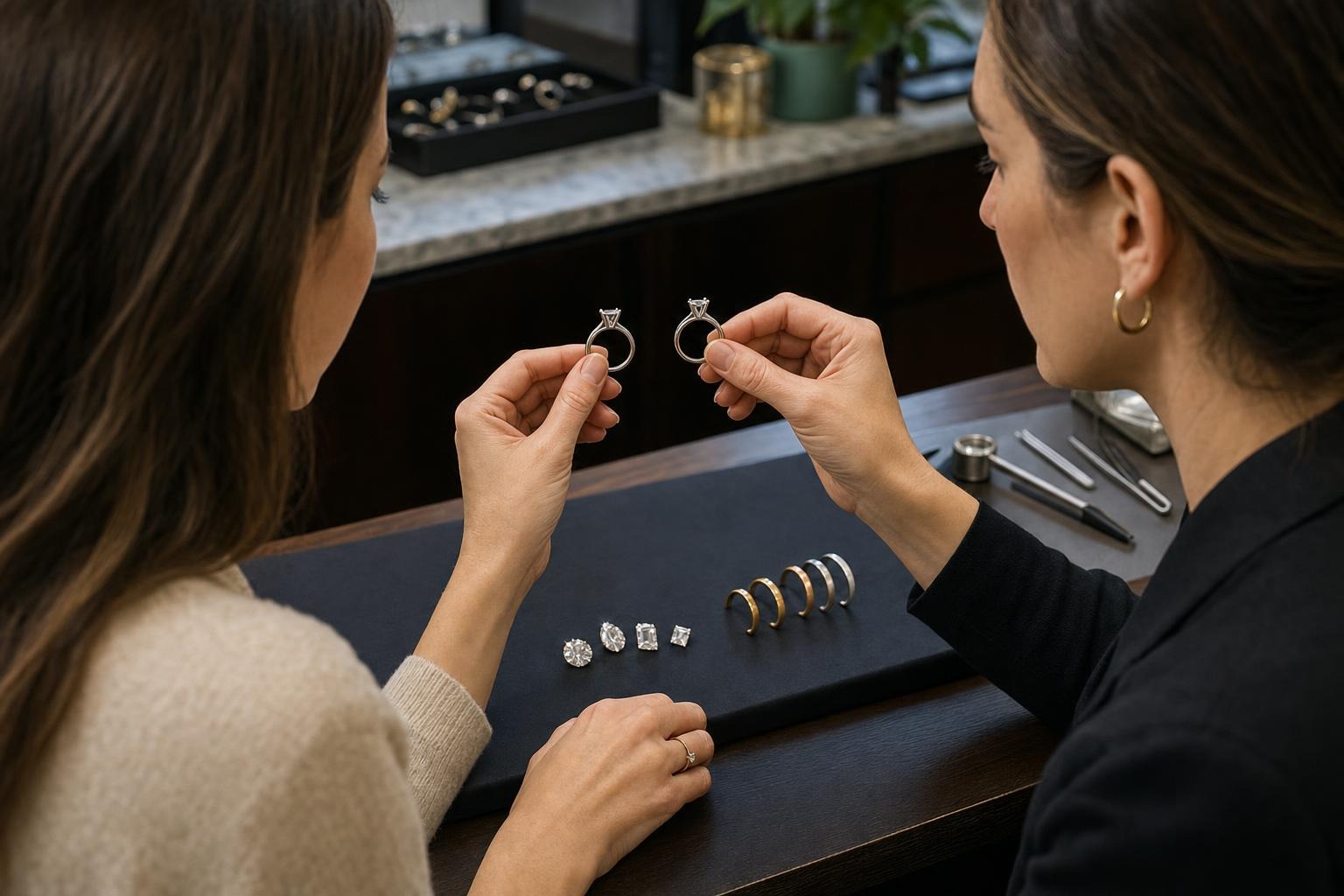
Before authorizing work, determine the objective. A daily-wear watch may need dependable water resistance and a sound bracelet. A historically important vintage model may call for minimal intervention and conservation of original surfaces. These objectives can lead to different repair choices.
Ask the service provider to itemize mandatory functional work separately from optional cosmetic work. Clarify these points in advance:
- Will the case or bracelet be polished, and can refinishing be declined?
- Which components may be replaced?
- Are manufacturer-supplied, period-correct, or compatible parts available?
- Will replacement parts alter the appearance or collectability?
- Can removed components be returned?
- What testing and service warranty will accompany the work?
Originality does not mean preserving active damage. A cracked crystal, failing gasket, corroded component, or dangerously worn bracelet may threaten the rest of the watch. The sound approach is informed intervention: repair what is necessary, document what changed, and avoid irreversible cosmetic work without a clear reason.
Manufacturer service can offer access to specified parts and established procedures. An independent watchmaker may be better suited to certain vintage movements or conservation requests. Evaluate the provider’s experience with the exact brand, caliber, and era—not simply a broad claim of luxury-watch expertise. Organizations such as the National Association of Watch and Clock Collectors can also provide educational context for owners researching horology and preservation.
Insure and appraise the watch appropriately
A standard homeowners or renters policy may limit coverage for jewelry and watches, particularly for theft, accidental loss, or loss away from home. Ask an insurance professional what is covered, whether the watch needs to be scheduled separately, which events are excluded, and whether settlement is based on replacement cost or another valuation method.
An appraisal should identify the watch accurately and reflect its intended purpose. Insurance replacement, estate planning, and potential resale are different questions and may produce different figures. Use a qualified appraiser familiar with watches, and update the valuation when the insurer requires it or when a meaningful market or condition change warrants review.
Keep appraisal images and serial details securely, separate from the watch. When traveling, avoid posting real-time location information that reveals what you are carrying or that your home is empty.
Prepare the watch for its next owner
A successful handover removes uncertainty. Before gifting or bequeathing the watch, assemble its box if retained, spare links, straps, tools specific to the model, original components, and the complete record file. Add a short care note explaining how to wind or set it, whether it should be kept away from water, and when it was last serviced.
If the recipient is unfamiliar with watches, demonstrate the crown and clasp rather than assuming the controls are intuitive. Warn against changing the date during any restricted period specified in the manual. Explain that resistance or unusual behavior is a reason to stop—not to apply more force.
The personal account belongs beside the technical file. A brief, factual letter about the people and moments connected to the watch gives future owners something no appraisal can supply. That combination of function, evidence, and story is what turns a possession into a durable family object.
Frequently asked questions
How often should an heirloom watch be serviced?
Start with the manufacturer’s current recommendation for the specific model. A broad planning range for many modern mechanical watches is about 5–10 years, but vintage construction, complications, water exposure, heavy use, and performance symptoms can justify earlier inspection. Do not use a generic interval to override the maker or a qualified specialist.
Should an old watch be polished before passing it down?
Not automatically. Polishing can remove scratches, but repeated or aggressive refinishing can soften edges, thin the case, and reduce engraving definition. Ask for a condition assessment and make polishing a separate, explicit decision. Cleaning and mechanical repair do not inherently require cosmetic refinishing.
Is it harmful to leave a mechanical watch unworn?
Ordinary periods of rest are generally expected. Store the watch dry and safely, then wind and set it according to its instructions. Very long storage, an unknown service history, or signs of degraded lubricant justify professional advice before regular use. A watch winder is mainly a convenience for selected automatic watches, not a requirement for every movement.
What should happen when a quartz watch stops?
Have the battery checked and replaced promptly by a suitable service provider. A depleted or leaking battery can damage the movement. If the watch remains stopped after battery replacement, it may require diagnosis rather than repeated battery changes.
Are the original box and papers essential?
No. A watch can hold deep family significance without them. Original materials can nevertheless support identification, provenance, and collector interest. If they are missing, begin a reliable record now with photographs, service invoices, ownership notes, and an accurate description.