A custom jewelry project in New York City commonly takes about six to ten weeks from the first design discussion to final pickup, although a straightforward piece may be ready sooner and an intricate design may take 12 weeks or more. Price depends primarily on the center stone or gemstones, precious-metal weight, design complexity, specialized labor, and how many revisions are required.
The best way to control both schedule and budget is to make the major decisions early. Set a target budget, identify the nonnegotiable design features, disclose the date when the piece is truly needed, and approve drawings or models only after reviewing them carefully. DistrictGem offers in-stock jewelry as well as design-your-own options sourced through New York City’s Diamond District, giving buyers a way to compare a custom project with pieces that are already available.
Key takeaways
- A realistic custom project often requires six to ten weeks, with extra time advisable for unusual stones, intricate construction, or multiple revisions.
- Design approval is a decision point, not a formality: changes made after approval can add labor, material costs, and production time.
- The center stone is often the largest price variable, but metal weight, setting style, craftsmanship, and finishing also affect the quote.
- Rush work may reduce comparison, sourcing, revision, and quality-control time; it cannot make every design practical by a fixed date.
- Request an itemized written quote and confirm what happens if the stone, dimensions, or design changes before production begins.
How long each stage of custom jewelry takes
Custom jewelry is a sequence of connected stages rather than one uninterrupted manufacturing period. A delay in design approval affects stone sourcing; a stone substitution may change the setting measurements; a structural change can require a revised model. Understanding those dependencies makes quoted lead times easier to evaluate.
Consultation and design direction: several days to two weeks
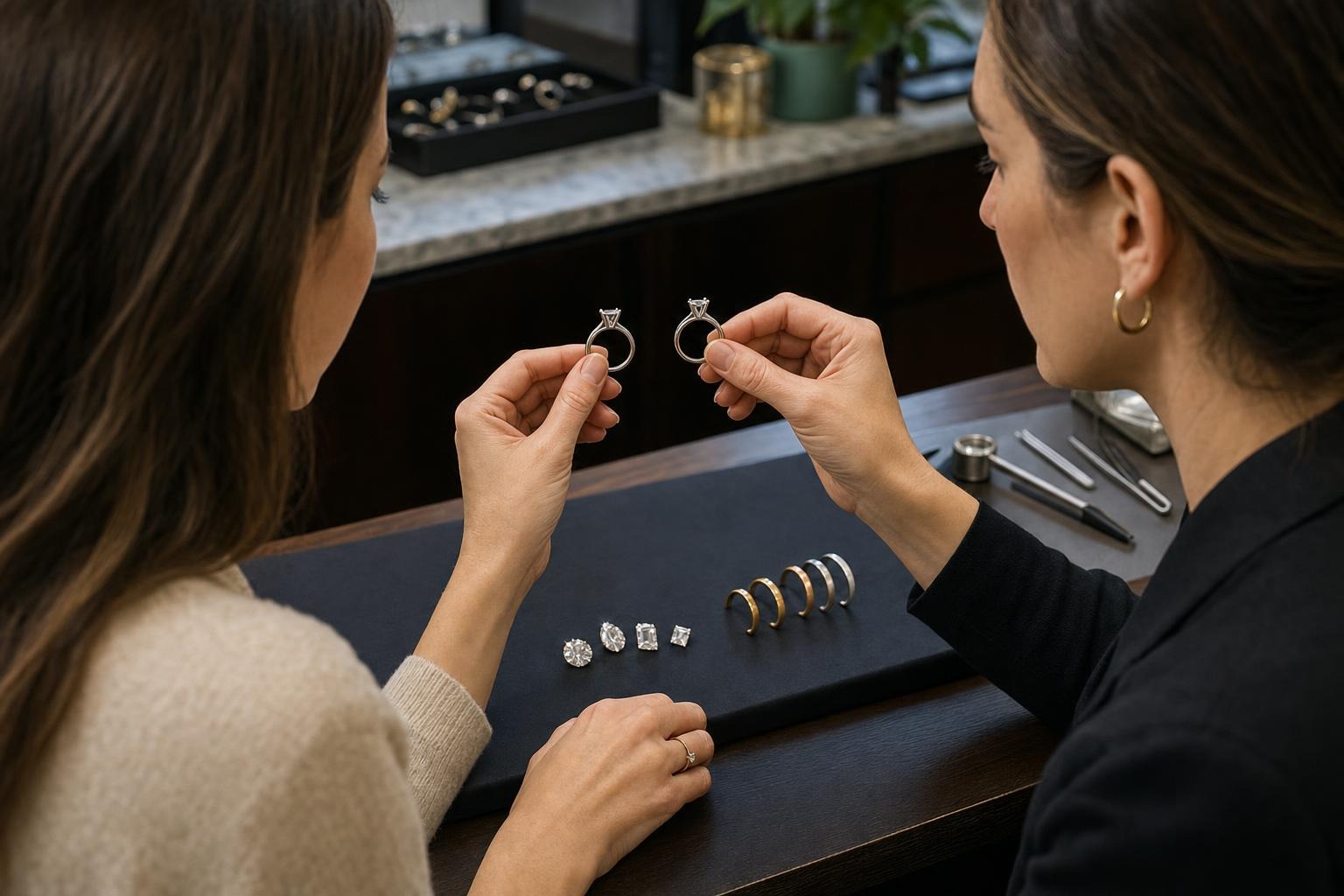
The first stage establishes the type of piece, intended style, dimensions, metal, stones, budget, and required completion date. An engagement ring discussion might cover center-stone shape, setting height, band width, prong style, wedding-band compatibility, and everyday wear. A pendant or pair of earrings requires a different set of decisions about scale, movement, chain length, matching stones, and weight.
A prepared buyer may settle the direction in one appointment. A buyer comparing several silhouettes or commissioning an unfamiliar motif may need additional conversations. Inspiration images can communicate proportion and mood, but they should serve as references rather than instructions to duplicate another jeweler’s protected design.
Drawings, CAD, or model approval: about one to three weeks
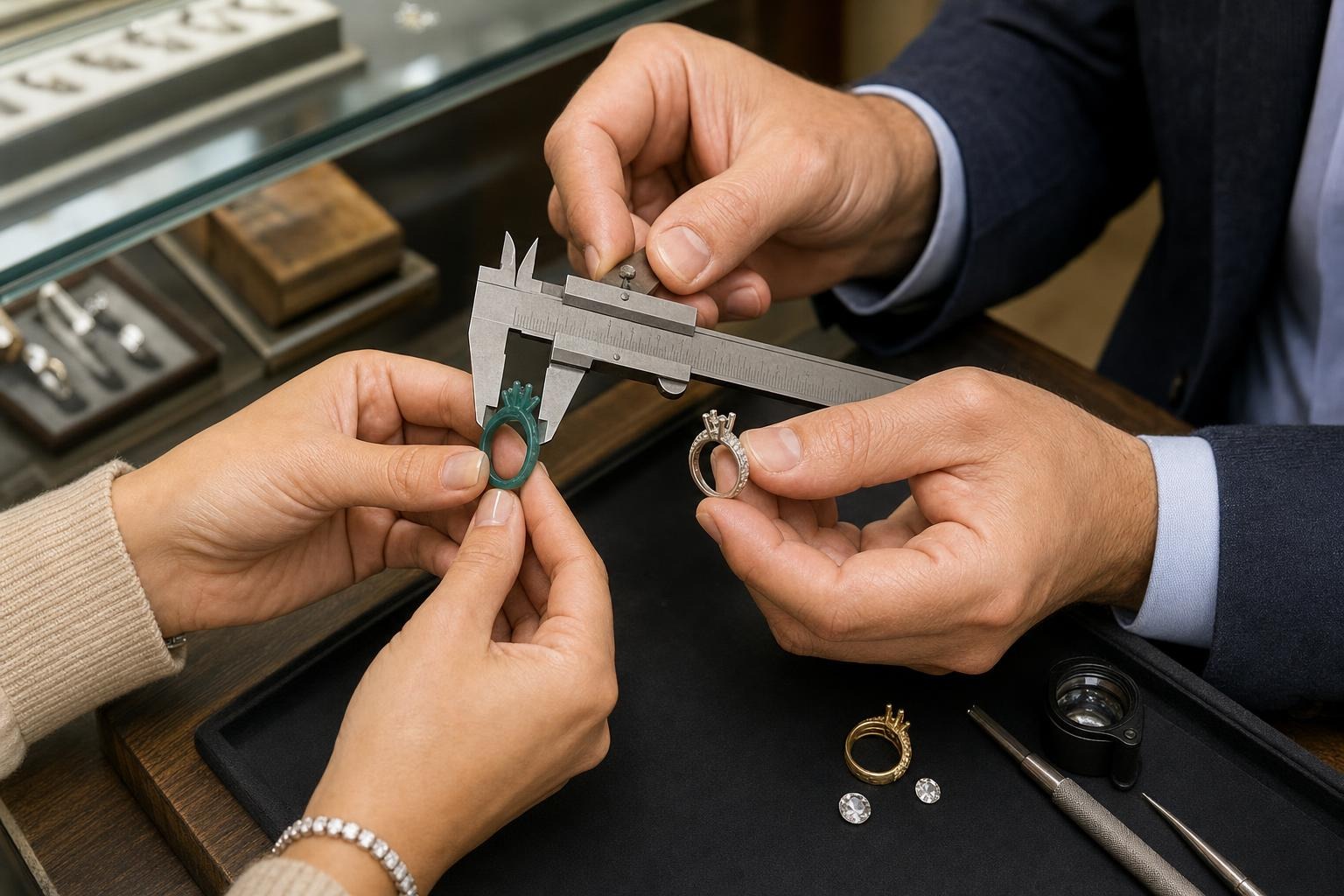
Depending on the project, the proposed design may be communicated through sketches, computer-aided design renderings, measurements, or a physical model. The goal is to confirm construction and proportions before precious metal and stones are committed.
Review the details that affect both appearance and wear: overall dimensions, stone orientation, band width and thickness, setting height, profile, number and placement of prongs, and any engraving. Renderings can make tiny features appear larger and more dramatic than they will look at actual scale, so request dimensions and evaluate them against a familiar object or jewelry size.
Each revision takes time. Consolidating feedback into one clear round is generally more efficient than approving one feature and reopening it later.
Stone and material sourcing: a few days to several weeks
A common diamond shape and standard alloy may be available quickly. Lead times can expand when the project calls for an unusually narrow size range, a matched pair, a particular color, an antique or specialty cut, or multiple calibrated stones.
Stone selection also affects the design. A setting should be engineered for the actual stone’s measurements rather than only its stated carat weight. Two diamonds of equal weight can have different diameters, depths, or outlines. If a center stone is changed after design work begins, the mounting may need to be adjusted or redesigned.
For diamonds represented with an independent grading report, check that the report number and measurements correspond to the stone under consideration. The Gemological Institute of America explains that its reports document characteristics including the 4Cs and identifying details; its report-check service can verify that report information matches the institute’s database.
Production, setting, and finishing: roughly two to five weeks
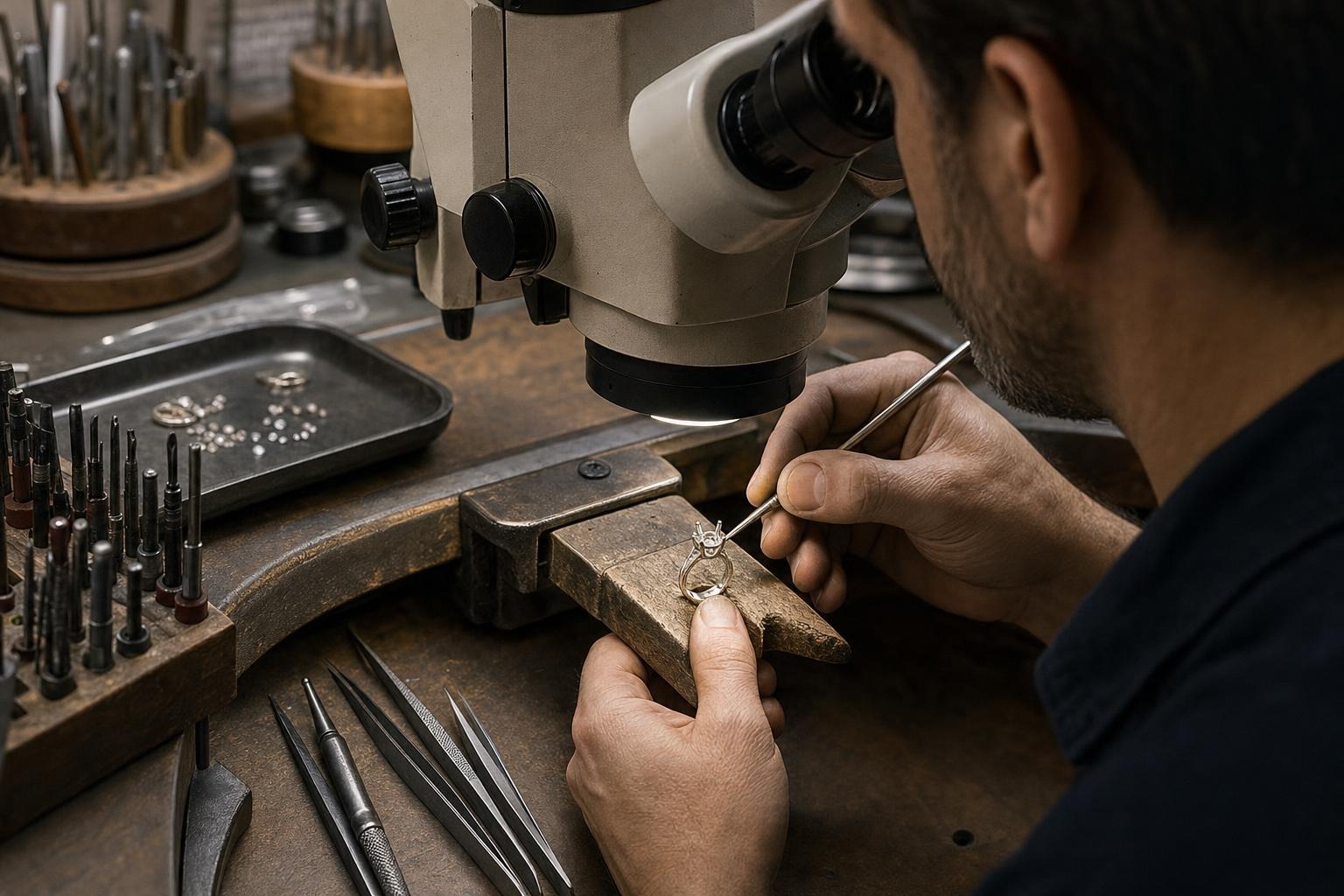
Once the design and materials are approved, production can include casting or fabrication, cleanup, assembly, stone setting, polishing, engraving, and inspection. Not every piece follows the same method. A simple solitaire and a hand-finished piece with pavé, hidden details, or several articulated components have very different labor requirements.
Finishing is part of production, not an optional last-minute step. Prongs must be checked, surfaces refined, stones cleaned, and the piece inspected under magnification. If the inspection reveals a concern, correcting it is preferable to releasing the piece merely to preserve an aggressive date.
What determines the price of a custom piece
A useful quote separates the major components and defines what is included. Comparing only the total can be misleading when one estimate includes a center stone, engraving, or design revisions and another does not.
Diamonds and gemstones
The stone can represent the largest portion of an engagement ring budget. Diamond pricing reflects a combination of carat weight, cut, color, clarity, shape, grading information, and market availability. Two stones with similar headline grades may still differ in proportions, visual character, or price.
Matched side stones and halos add material and setting labor. Colored gemstones bring other variables, including species, treatment disclosures, origin claims when made, durability, dimensions, and cutting quality. Buyers should ask how the stone is described on the invoice and whether any treatment or laboratory-grown origin is disclosed. The US Federal Trade Commission’s Jewelry Guides address representations about precious metals, diamonds, gemstones, and treatments.
Metal type and finished weight
Platinum and gold differ in material price, density, fabrication behavior, and maintenance characteristics. Within gold, karat and alloy choice affect color and composition. Finished weight matters as well: a wide band or substantial pendant uses more metal than a delicate design.
Reducing weight solely to lower the quote can compromise the intended proportions or durability. A better question is whether the design can be simplified while retaining appropriate structure.
Complexity and bench labor
Labor increases with the number of stones, precision of matching, difficulty of setting, hand fabrication, moving parts, fine engraving, and the amount of finishing required. A minimal-looking piece is not necessarily simple to make. Flush settings, exact symmetry, sharp geometric transitions, and very fine pavé can demand considerable precision.
Customization also includes professional time before production. Original design development, technical problem-solving, models, and revisions have value even before metal is cast or fabricated.
Revisions and scope changes
Ask how many design revisions the quote includes and when additional fees begin. Changing a detail during the design phase is usually less disruptive than changing it after a model, mold, or mounting exists.
A scope change can also create cascading costs. Choosing a larger center stone may require a new head, heavier shank, different side-stone proportions, and more labor. Document approvals and changes so the final scope remains clear to both buyer and jeweler.
How to compare quotes without losing important details
Provide every jeweler with the same basic brief: jewelry type, target dimensions, preferred metal, stone requirements, ring size if relevant, engraving, budget, and required date. Then ask each quote to distinguish among the stone, mounting, design work, setting, engraving, taxes, and any delivery charges.
Clarify whether the quote is fixed or may change after stone selection or final metal weight is known. Ask about deposits, cancellation terms, ownership of models or design files, resizing policies, and what happens if the approved design requires a technical modification during production.
For stone comparisons, use complete specifications rather than carat weight alone. For craftsmanship, compare construction method, setting details, proportions, and finishing expectations. The lowest total is not automatically the best value if it omits a component required to complete the piece.
Rush orders and fixed event dates
Tell the jeweler the actual deadline during the first conversation, especially if the piece is intended for a proposal, wedding, anniversary, or trip. Add a personal buffer rather than planning pickup on the day of the event. Weather, shipping, sourcing, or a failed inspection can affect even a carefully managed project.
A rush order may be possible when the design is simple, materials are available, and decisions can be made promptly. It may involve an added fee or a narrower range of options. Some steps, however, should not be compressed beyond what responsible production allows.
When time is short, consider an in-stock piece or a simpler custom design rather than forcing an intricate concept into an unsuitable schedule. Another option for an engagement is to present a temporary proposal ring and design the permanent ring together afterward. The right choice depends on whether surprise, personalization, or the event date carries the greatest importance.
Illustrative schedules and budget frameworks
These examples are planning models, not quotes. Actual feasibility and price depend on the selected stones, metal, dimensions, labor, and current availability.
A classic custom engagement ring
A relatively streamlined project might allow one week for consultation, one to two weeks for design approval, up to two weeks for center-stone selection, and three to four weeks for production and inspection. Some stages may overlap, producing an overall window of approximately six to nine weeks.
For budgeting, separate the center stone from the mounting. A buyer with a fixed total can compare several stone-and-setting combinations: allocating more to diamond size or grade with a simpler solitaire, or selecting a more modest center stone while preserving budget for a detailed setting. This is more informative than assuming one universal price range for a “custom ring.”
A matched-stone anniversary piece
Diamond earrings or a multi-stone anniversary ring may require additional sourcing time because the stones need to coordinate in dimensions and appearance. A planning window of eight to twelve weeks may be more realistic when matching is selective or the design has numerous settings.
Create a base budget, a preferred budget, and an absolute ceiling. Ask what changes between those levels—for example, stone size, grade, metal weight, or design detail—rather than requesting unexplained discounts.
An intricate heirloom-style design
A piece involving unusual stone dimensions, extensive pavé, engraving, or multiple bespoke components can extend beyond 12 weeks. The quote may also evolve until the final stone and technical design are confirmed. A written range can be useful at the concept stage, followed by a firm approval amount before production.
Build contingency into both time and money, but do not authorize open-ended spending. The jeweler should obtain approval before making a material change that increases the agreed cost.
Questions to ask before approving production
Before paying the production deposit or giving final approval, confirm:
- What exact design, dimensions, metal, stones, and finish does the quote cover?
- Is the center stone included, and will its identifying information appear on the invoice?
- How many revisions are included before additional design fees apply?
- What completion window is realistic, and which decisions could move it?
- Is engraving, sizing, setting, inspection, tax, or delivery charged separately?
- What changes remain possible after approval, and what would they cost?
- How will treatments, laboratory-grown origin, metal fineness, and other material details be documented where applicable?
These questions convert a visual idea into an understandable scope of work. They also make later comparisons more meaningful because every estimate covers the same intended result.
Frequently asked questions
How early should I start a custom engagement ring in NYC?
Starting three months before the intended proposal provides useful room for design decisions, stone sourcing, production, inspection, and an unexpected delay. A straightforward ring may require less time, while an unusual stone or elaborate setting may need more. Share the true deadline before design begins.
Do I need to choose the diamond before the setting is designed?
Not always, but the final setting should reflect the actual stone’s dimensions. A general style can be developed first; precise engineering should normally wait until the center stone is selected. Replacing it later may require design changes.
Is custom jewelry always more expensive than in-stock jewelry?
Not necessarily. Custom work includes design and specialized labor, but price still depends on stone selection, metal weight, and complexity. A restrained custom solitaire may cost less than an elaborate in-stock ring with many diamonds. Compare equivalent materials and construction rather than labels alone.
Can a custom order be completed in two or three weeks?
It may be possible for a simple design when materials are immediately available and approvals happen quickly, but it should not be assumed. Intricate settings, specialty stones, engraving, and multiple revisions make such a deadline less realistic. Ask what must be simplified and which quality-control steps remain unchanged.
When does the quoted price become final?
That depends on the jeweler’s process. A preliminary estimate may change after the stone, dimensions, and design are confirmed. Request a written final price—or clearly defined range—before authorizing production, along with the process for approving any later change.