The right diamond shape is the one that balances the wearer’s style with everyday practicality and a realistic budget. Round diamonds offer intense sparkle and broad versatility; oval and marquise stones create an elongated look; emerald and Asscher cuts emphasize crisp geometry; cushion and princess cuts feel substantial; and pear or heart shapes make a more distinctive statement.
Shape matters because it determines far more than the outline of a ring. It affects how the diamond reflects light, how large it appears from above, which inclusions may be noticeable, and how securely it can be set. It also influences the ring’s overall character before details such as metal color or side stones enter the picture.
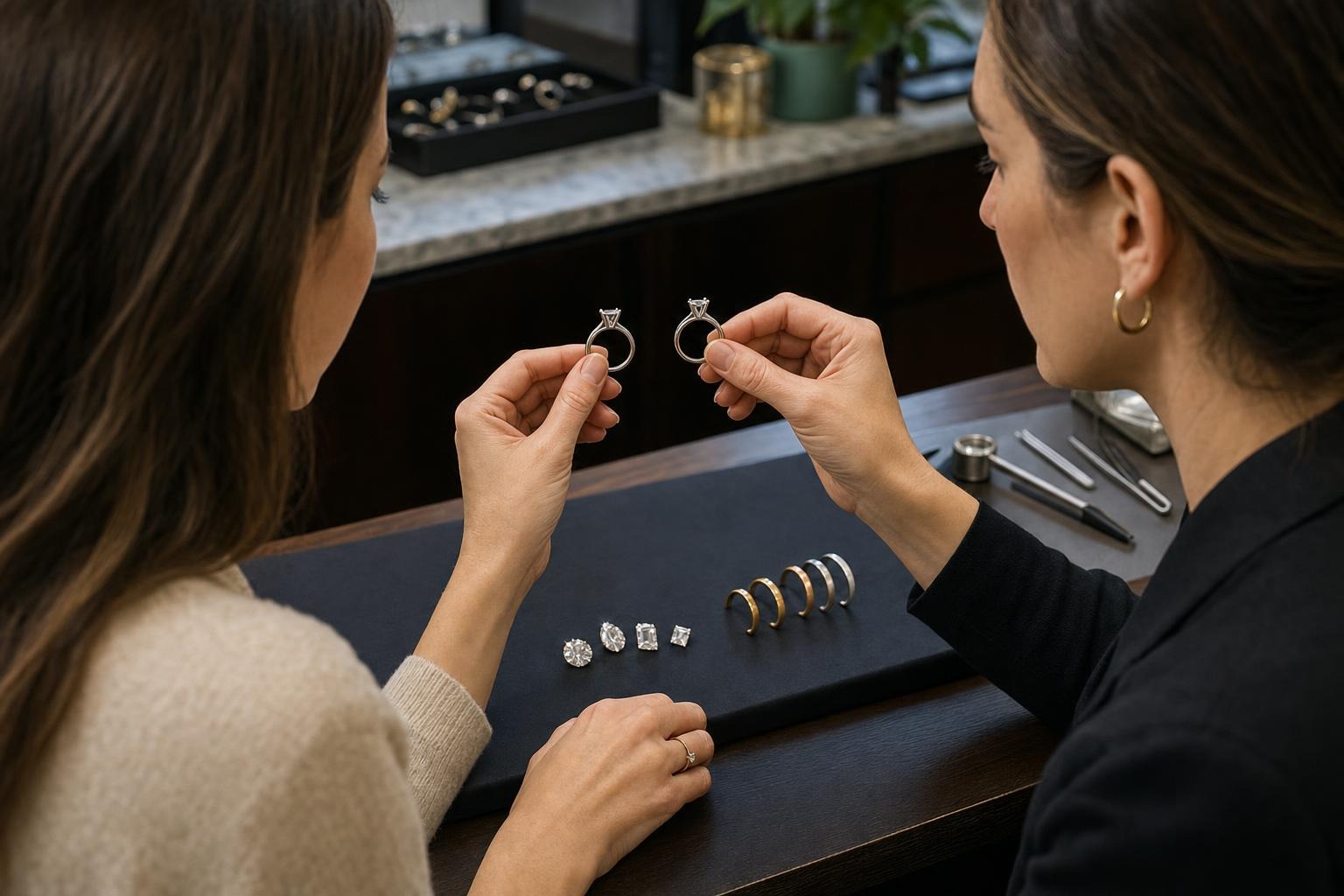
The most useful way to choose is to compare several shapes in the intended carat-weight range, viewed both loose and in settings. A shape that looks compelling in an isolated photograph can feel very different once it is proportioned to a real hand.
Key takeaways
- Round brilliant is the dependable choice for strong sparkle and compatibility with almost every setting, though it may command a higher price than many fancy shapes.
- Oval and marquise diamonds can provide generous visual coverage and create a lengthening effect on the finger.
- Emerald and Asscher cuts reward careful attention to clarity because their broad, step-cut facets reveal the diamond’s interior more readily.
- Pointed corners and tips need protective prongs, especially on princess, pear, marquise, and heart shapes.
- Finger shape can guide the search, but personal style, setting proportions, and daily wear should decide the final choice.
Start with shape, then evaluate cut quality
Diamond shape describes the stone’s visible outline: round, square, rectangular, oval, or another silhouette. Cut quality describes how well its angles, proportions, polish, and symmetry work together to return light. The two concepts are related but not interchangeable.
A poorly proportioned diamond does not become attractive merely because its shape is fashionable. Conversely, a carefully fashioned fancy-shape diamond may look lively and balanced even though laboratories do not assign it the same overall cut grade used for modern round brilliants.
The Gemological Institute of America’s guide to diamond shapes is a useful starting point for understanding these silhouettes. When comparing individual stones, examine laboratory information alongside videos or an in-person view. For fancy shapes, visual judgment is especially important: two diamonds with identical weight and grading characteristics can have noticeably different outlines and light performance.
Round brilliant: maximum versatility and lively sparkle
The round brilliant is engineered around symmetrical facets that produce abundant brightness, fire, and scintillation. It works in understated solitaires, halos, three-stone rings, and more intricate designs. That flexibility makes it a safe option when the recipient’s preferences are not completely known.
The trade-off is price. Cutting a round shape generally retains less of the original rough crystal than certain fancy shapes, and demand remains strong. Comparable round diamonds may therefore cost more than non-round options with similar grading characteristics.
Round stones also tend to show their weight in a compact, even diameter rather than spreading it lengthwise. Shoppers prioritizing face-up coverage may prefer to compare a round with oval, marquise, or pear diamonds at the same weight. Still, few shapes match a well-cut round for consistency, setting choice, and timeless appearance.
Princess and cushion: two different approaches to a substantial look
Princess-cut diamonds have a square or slightly rectangular outline, sharp corners, and brilliant-style faceting. Their straight edges suit contemporary settings and pair neatly with geometric side stones or wedding bands. Because the corners are vulnerable, they should be enclosed by secure prongs or another protective setting design.
A square princess cut can appear clean and architectural, but not every example has the same visual character. Look for a centered pattern without large dark areas and confirm whether the outline is truly square if that symmetry matters to the design.
Cushion-cut diamonds combine softened corners with a square or elongated outline. Some show broad, chunky flashes; others have a finer, more splintered pattern. That variation is part of their appeal, but it makes side-by-side comparison essential. An elongated cushion can cover more length on the finger, while a square cushion creates a balanced, compact centerpiece.
Cushions suit both antique-inspired and modern rings. A slim solitaire emphasizes the outline, while a halo can make the overall presentation more ornate. Because cushions vary widely in depth and proportions, carat weight alone is not a reliable indication of their visible size.
Oval and marquise: elongated shapes with strong finger coverage
Oval diamonds combine a rounded outline with brilliant-style sparkle. Their length can make the finger appear more elongated, and they often present a larger visible area than a round stone of equal weight. The outline may range from softly rounded to long and narrow, so there is no single ideal length-to-width ratio for every wearer.
Look closely for a dark bow-tie pattern across the center. Some contrast is common in elongated brilliant shapes, but a prominent dark band can distract from the diamond’s overall brightness. Videos taken in ordinary, diffused lighting are more informative than highly directed showroom lighting alone.
Marquise diamonds extend the same lengthening effect further. Their pointed ends and broad middle produce substantial coverage and a dramatic, historic silhouette. Symmetry is critical: the two tips should align, and the curved sides should mirror each other without appearing uneven or excessively narrow.
Both tips need protection. Well-positioned prongs help shield them from impact, while a setting that keeps the stone from sitting unnecessarily high can make the ring easier to wear every day.
Emerald and Asscher: quiet brilliance and precise geometry
Emerald-cut diamonds are rectangular step cuts with long, parallel facets and clipped corners. Instead of the rapid flashes associated with brilliant cuts, they produce broader reflections often described as a hall-of-mirrors effect. Their restrained appearance works particularly well in streamlined solitaires and three-stone settings.
Those open facets also make internal characteristics easier to see. Buyers considering an emerald cut should inspect clarity with their own eyes rather than purchasing by the grade alone. Color may also be more apparent in the corners or body of a larger step-cut stone, depending on the individual diamond and setting metal.
Asscher cuts share the step-cut structure but use a square outline with deeply clipped corners. They usually look more compact and architectural than emerald cuts. Their concentric facet pattern should appear centered and orderly, without a persistently dark middle.
These shapes suit someone who values symmetry, clean lines, and understated flashes over constant sparkle. They can also look especially cohesive with tapered baguettes or simple bands, although the center stone should remain the priority when allocating the budget.
Pear and heart: distinctive shapes that require careful setting
A pear-shaped diamond combines a rounded end with a single pointed tip. Worn with the point facing either direction, it creates an asymmetrical silhouette and can visually lengthen the finger. The shoulders should look balanced, and the point should align with the center of the rounded end. As with ovals and marquises, check the bow tie under several lighting conditions.
The tip is the most vulnerable area and should be protected by a V-shaped or similarly secure prong. Pear diamonds also tend to rotate more noticeably if the ring is loose, so correct sizing and a stable setting matter.
Heart-shaped diamonds are the most literal statement choice. Their appeal depends heavily on symmetry: the two lobes should be balanced, the cleft distinct, and the point centered. In very small sizes, the outline can become difficult to read, particularly once prongs are added. A heart shape often benefits from enough visible surface area and a setting that does not obscure its defining contours.
Match the outline to the hand without following rigid rules
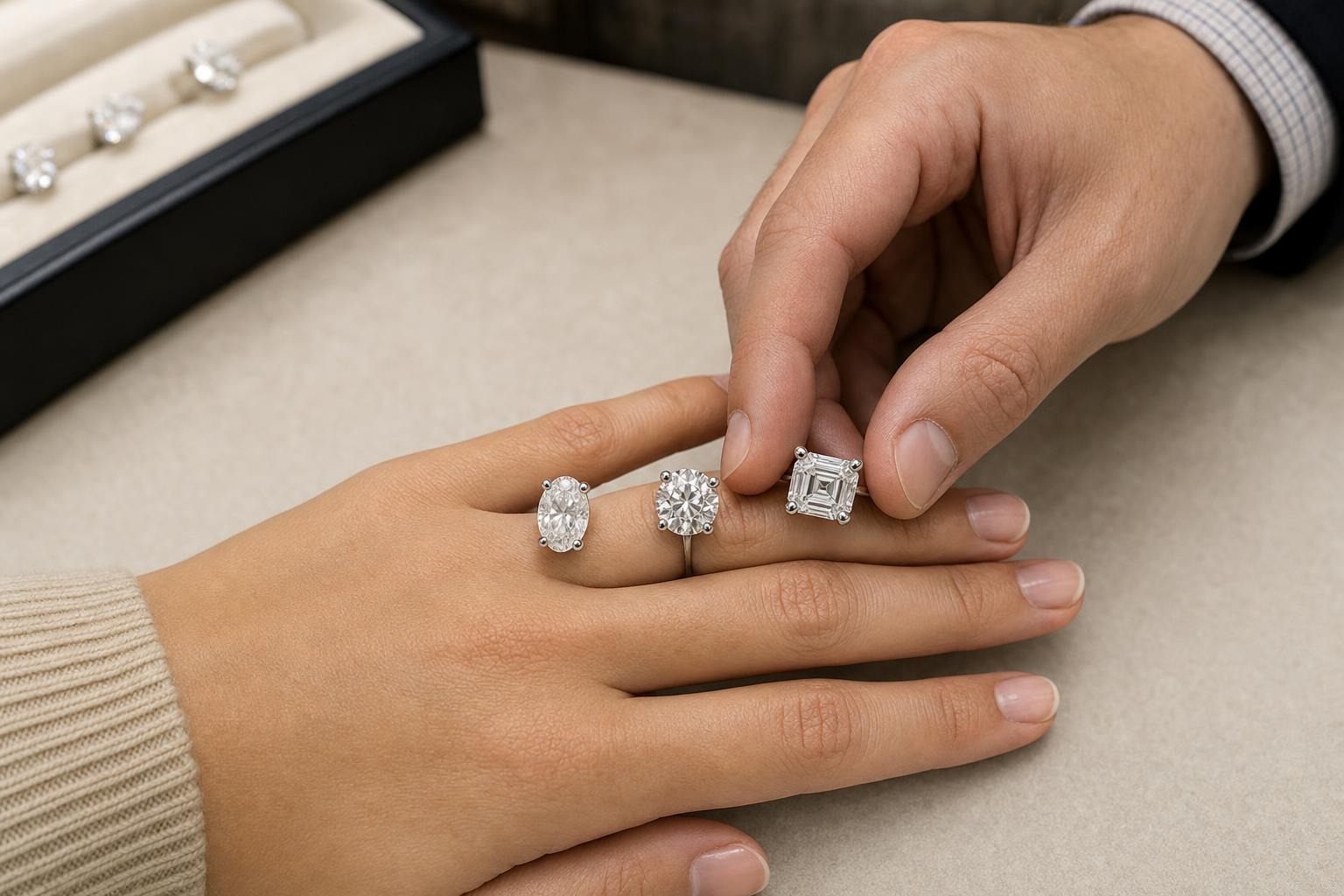
Advice about “correct” shapes for particular fingers should be treated as a starting point, not a restriction. Long shapes—including oval, pear, marquise, and elongated cushion—can visually extend shorter or wider fingers. Round, square cushion, princess, and Asscher cuts create a more centered presentation and may feel harmonious on long or slender fingers.
Proportion is more useful than labels. Note the diamond’s millimeter length and width, then consider the width of the finger and band. A very narrow marquise may look out of balance on a broad band, while a compact Asscher can gain presence from a tapered shank. Smaller hands do not automatically require small stones, nor do larger hands require high carat weights.
If the ring is a surprise, study jewelry the recipient already wears. Rounded forms, clean rectangles, vintage details, or bold asymmetry offer better clues than assumptions about hand shape. A temporary or adjustable presentation setting may also preserve flexibility if exact sizing is uncertain.
Balance visual size, quality, and budget
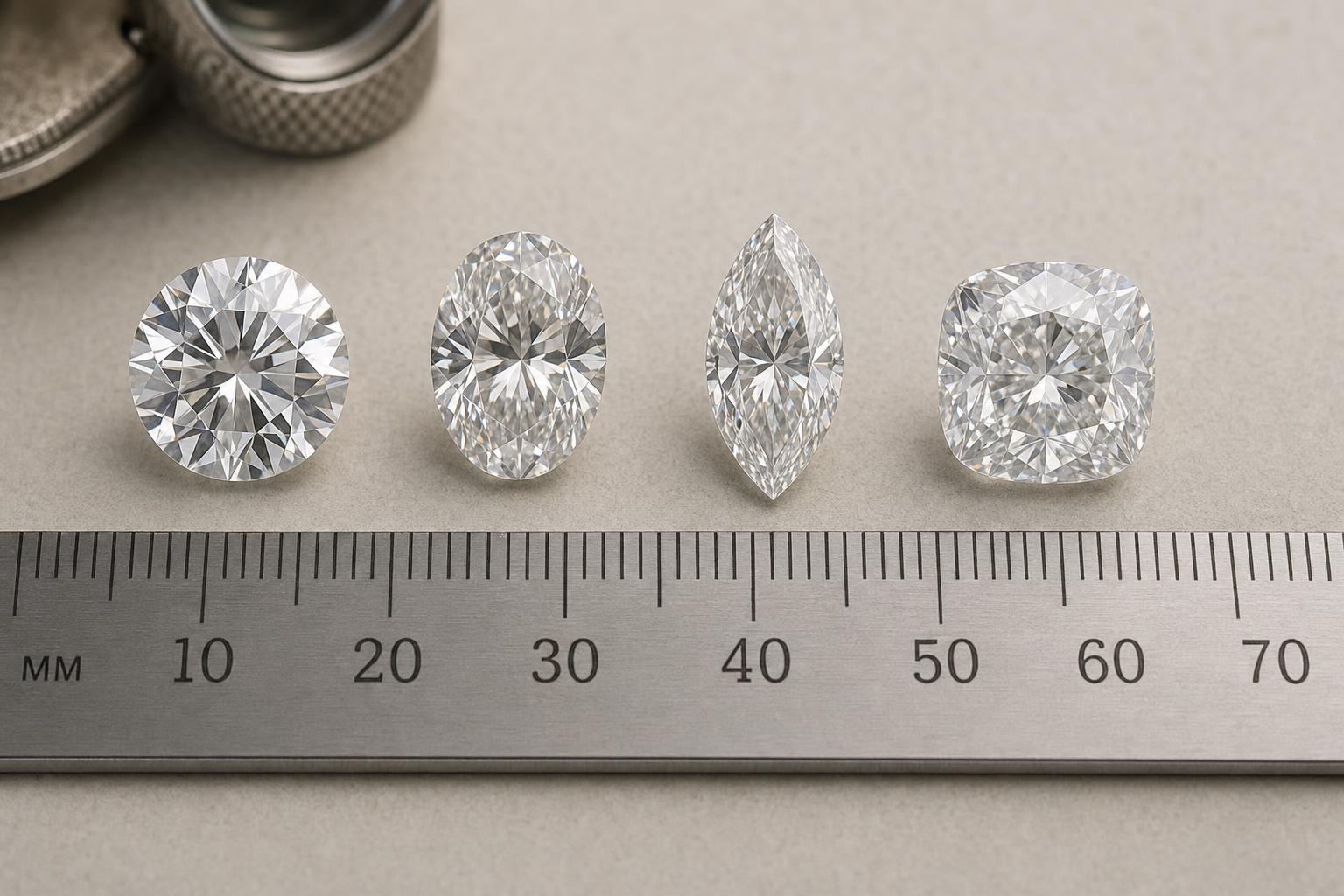
Carat measures weight, not face-up dimensions. Two one-carat diamonds can appear different in size because one carries more weight in its depth or distributes it across a longer outline. Always compare millimeter measurements along with carat weight.
Round diamonds often carry a market premium, while fancy shapes may offer more visible coverage for the budget. That does not mean every fancy diamond is automatically better value. An overly deep cushion can hide weight below the setting, and an excessively shallow elongated stone may sacrifice attractive light performance.
Set priorities before comparing inventory:
- Choose two or three preferred outlines.
- Establish a total ring budget, including the setting.
- Decide whether sparkle, visible size, clarity, or color matters most.
- Compare diamonds at similar dimensions, not carat weight alone.
- Inspect each option for symmetry, distracting dark areas, and a pleasing outline.
- Confirm that the setting protects corners and tips without obscuring the shape.
DistrictGem offers diamonds and engagement-ring designs sourced in New York City’s Diamond District, including in-stock pieces and options to design a ring. When reviewing possibilities, compare the center diamond and setting as one composition rather than making each decision in isolation. A lower-profile solitaire, for example, may suit an active wearer better than a high setting even if both feature the same stone.
A quick decision guide
Choose a round brilliant for reliable sparkle, timeless styling, and the widest setting compatibility.
Choose an oval or marquise for elongated coverage and a shape that stands out without departing too far from classic brilliant faceting.
Choose a cushion for soft corners and a choice between vintage warmth and modern brilliance.
Choose a princess for a sharp, contemporary square silhouette—provided its corners are properly protected.
Choose an emerald or Asscher for precise geometry and broad flashes, with extra attention paid to clarity and facet pattern.
Choose a pear or heart for a recognizable statement shape and accept the need for thoughtful orientation, symmetry, and tip protection.
The final comparison should happen in realistic light and at realistic scale. View the candidates at arm’s length, rotate them slowly, and consider how each will look during ordinary daily wear—not only under bright display lights.
Frequently asked questions
Which diamond shape sparkles the most?
A well-cut round brilliant is generally the most dependable choice for intense sparkle because its facet arrangement was developed to maximize light return. Fancy brilliant shapes can also be lively, but their performance varies more from stone to stone.
Which shape looks largest for its carat weight?
Oval, marquise, and pear diamonds often appear large because their weight is distributed across an elongated face-up area. Actual dimensions and depth still matter, so compare millimeter measurements rather than relying on shape or carat weight alone.
Are elongated diamonds always flattering?
They can lengthen the appearance of a finger, but outline and proportion matter. A balanced oval may feel more natural than an extremely narrow marquise, while another wearer may prefer the stronger drama of the latter. There is no universally flattering ratio.
Is clarity more important for emerald-cut diamonds?
Clarity deserves particular attention in emerald and Asscher cuts because their large, open facets can make inclusions easier to notice. The grade is a screening tool; direct visual inspection determines whether a characteristic is distracting in a specific stone.
Should the diamond or the setting be chosen first?
Choose the general shape and center stone first, then select or design a setting around its exact dimensions. This approach allows prongs, proportions, band width, and height to protect and complement the individual diamond.