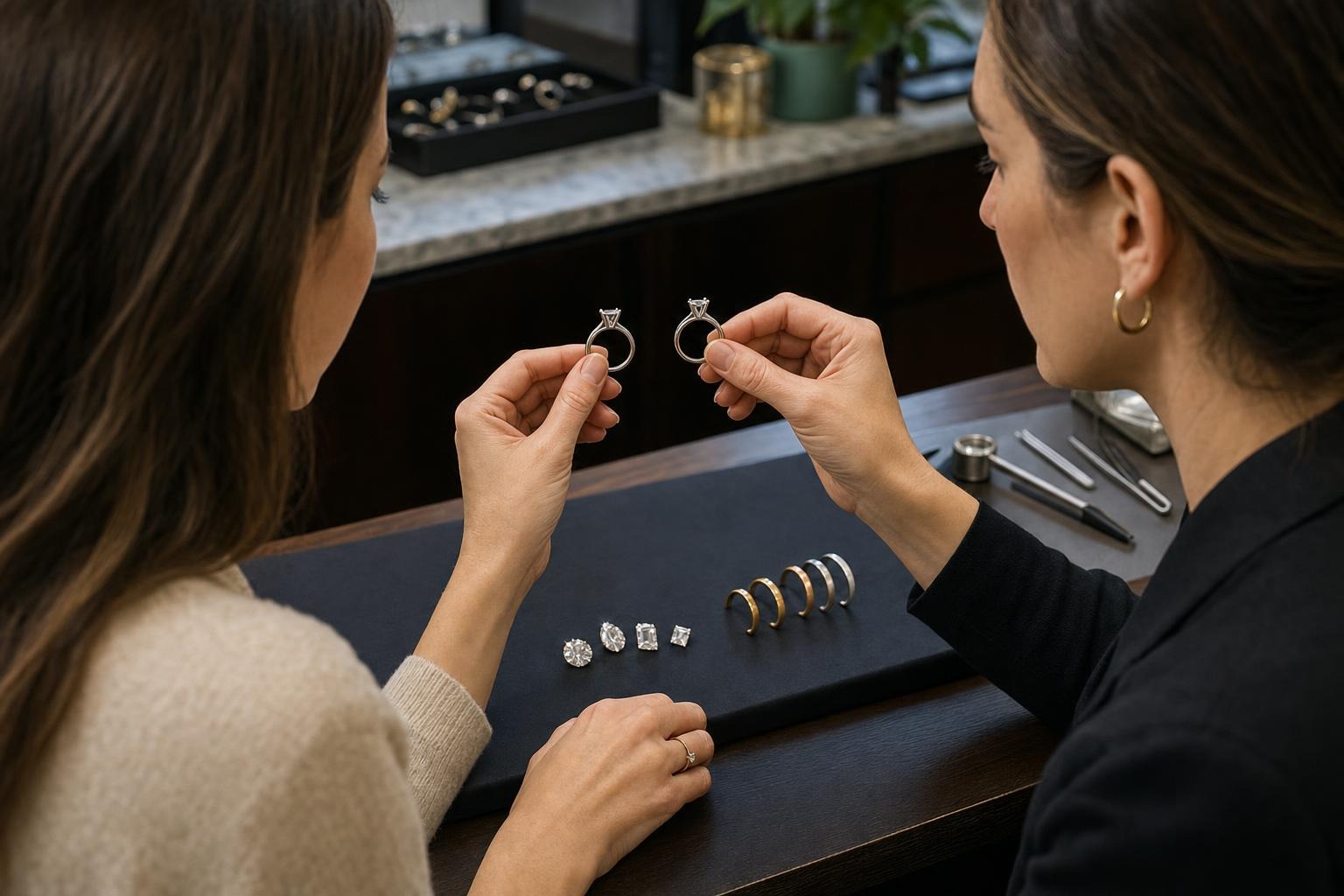
A productive custom jewelry appointment begins before the first sketch. You do not need to arrive with a finished design, but you should be ready to explain what the piece is meant to express, how it will be worn, what you want to spend, and when you need it.
That preparation gives the jeweler useful boundaries without closing off creative possibilities. It also helps prevent a common source of revisions: discovering late in the process that an inspiration image conflicts with the budget, lifestyle, preferred stone, or required delivery date.
Whether the conversation happens through video, email, or across a showroom counter, bring a short collection of references and a written list of priorities. For an engagement ring, those priorities might be a low profile, a round center diamond, and a setting that works beside a wedding band. For a pendant or pair of earrings, they might be a particular silhouette, metal color, and level of everyday durability.
Key takeaways
- Collect a small, edited set of inspiration images and note what you like about each one.
- Establish a comfortable total budget rather than focusing only on the center stone or a single material.
- Separate essential features from preferences that can change if they affect price, comfort, or timing.
- Provide accurate sizing and explain how, where, and how often the piece will be worn.
- Ask what happens after the appointment, including approvals, revisions, production milestones, and final delivery.
Build a focused inspiration collection
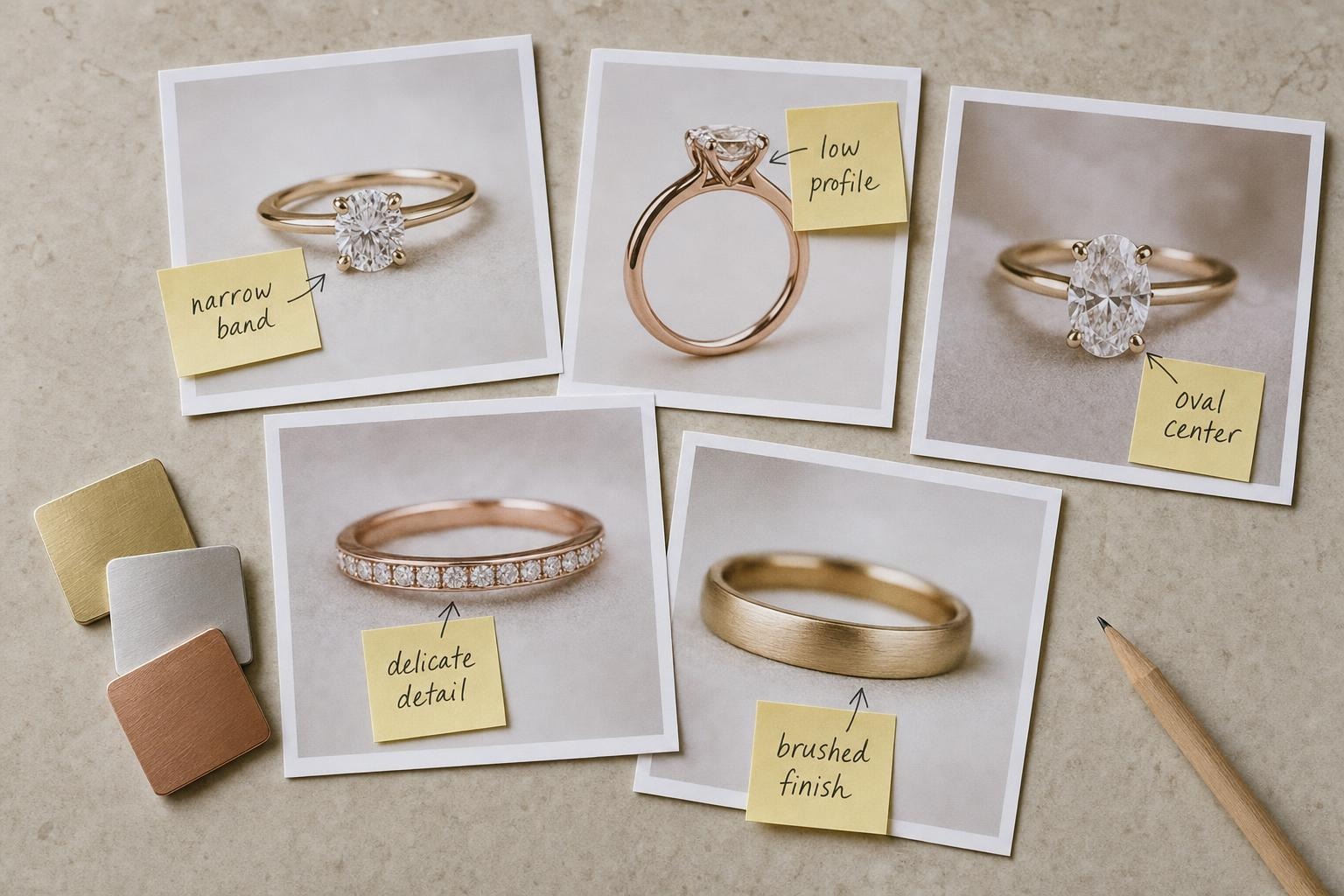
Five relevant images are usually more useful than 50 unrelated ones. Choose examples that reveal a consistent direction, then annotate them. “I like the narrow band and low setting” gives a designer more information than “I like this ring.”
Your references can show:
- Overall shape and proportions
- Stone cuts or color combinations
- Setting styles and prong details
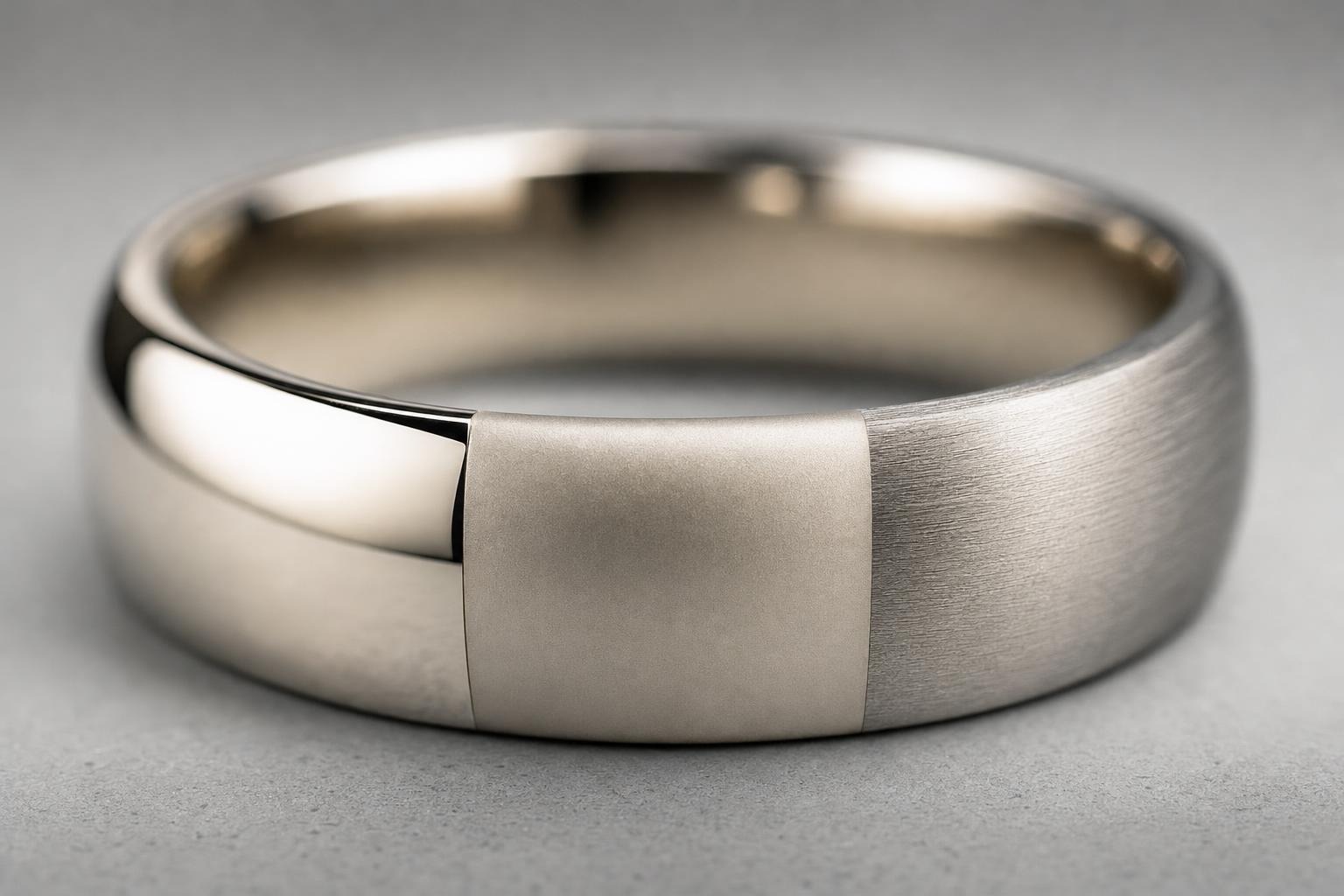
- Metal color and surface finish
- Engraving, texture, or other decorative elements
- Details you actively dislike
References do not all need to be jewelry. Architecture, textiles, family objects, or natural forms can communicate shape and mood. A photograph of an Art Deco doorway, for example, may clarify that you prefer strong geometry and symmetry. A vintage brooch might reveal an interest in milgrain or contrasting stones.
Avoid treating any reference as a design to duplicate exactly. Use it to identify components that could inform an original piece. If you are combining elements from several designs, explain which feature matters in each image: perhaps the first has the right stone orientation, the second has the preferred band width, and the third captures the desired level of detail.
For a remote appointment, place the images in one folder or a simple shared document and label them before the call. Include clear photographs of any existing jewelry that will influence the design, such as a wedding band that must sit beside a new ring or an heirloom stone being considered for reuse. The jeweler will need to evaluate inherited materials before confirming whether they are suitable for a new setting.
Define your budget, priorities, and deadline
Share a realistic total spending range early. Custom jewelry pricing can reflect stones, metal, design complexity, labor, and other production requirements, so a budget that accounts for the complete piece is more useful than a center-stone figure alone.
A range also gives the designer room to discuss trade-offs. If a larger diamond and intricate setting cannot both fit comfortably within the budget, you can decide which feature carries more meaning. Possible adjustments may include changing stone specifications, simplifying small decorative details, or reconsidering dimensions. The right option depends on the design and should be discussed with the jeweler rather than assumed in advance.
Write two lists before the appointment:
Non-negotiable priorities: The features the finished piece must have, such as yellow gold, a particular birthstone, a low-profile setting, or space for an engraving.
Flexible preferences: Features you like but would change for better comfort, visual balance, timing, or cost.
Be equally direct about timing. Give the actual date on which you need the piece, not only the occasion date. If it must travel with you, allow for pickup or insured delivery. Custom work may involve design approval, sourcing, production, setting, finishing, and inspection; the jeweler should confirm whether your requested schedule is feasible. A tight deadline can limit options, so disclose it at the beginning rather than after a design has been developed.
Consider stone preferences without over-specifying
You do not need to become a gemologist before discussing a custom piece. It is useful, however, to understand which visible characteristics matter to you and where you are willing to compromise.
For a diamond, consider shape first. Round, oval, emerald, cushion, pear, and other cuts create different outlines and influence how a piece can be designed around the stone. Then think about apparent size, brilliance, color, clarity, and cut quality. The Gemological Institute of America’s guide to the diamond 4Cs provides an independent introduction to cut, color, clarity, and carat weight.
Bring a few examples of proportions you enjoy rather than selecting by carat weight alone. Two diamonds of equal weight can look different from above because their shapes and dimensions differ. If you have certification preferences, want a certified diamond, or wish to see options within particular specifications, say so at the outset.
For colored gemstones, discuss hue, saturation, tone, shape, and intended use. Also tell the jeweler how frequently the piece will be worn. A stone selected for an occasional pendant faces different wear conditions than one set in an everyday ring. Ask the jeweler to explain the practical implications of the stones under consideration, including appropriate setting and care considerations.
If you are unsure, rank what your eye notices most. One buyer may prioritize the crisp geometry of an emerald-cut diamond; another may care more about a bright face-up appearance or a warm metal-and-stone combination. A clear visual preference is often more helpful than a long list of technical grades disconnected from how the finished piece should look.
DistrictGem offers certified diamonds and custom fine-jewelry design online, alongside in-stock jewelry and watches sourced in New York City’s Diamond District. Reviewing available pieces before your appointment can help you identify proportions, settings, and finishes that suit your taste.
Bring accurate sizing and fit information
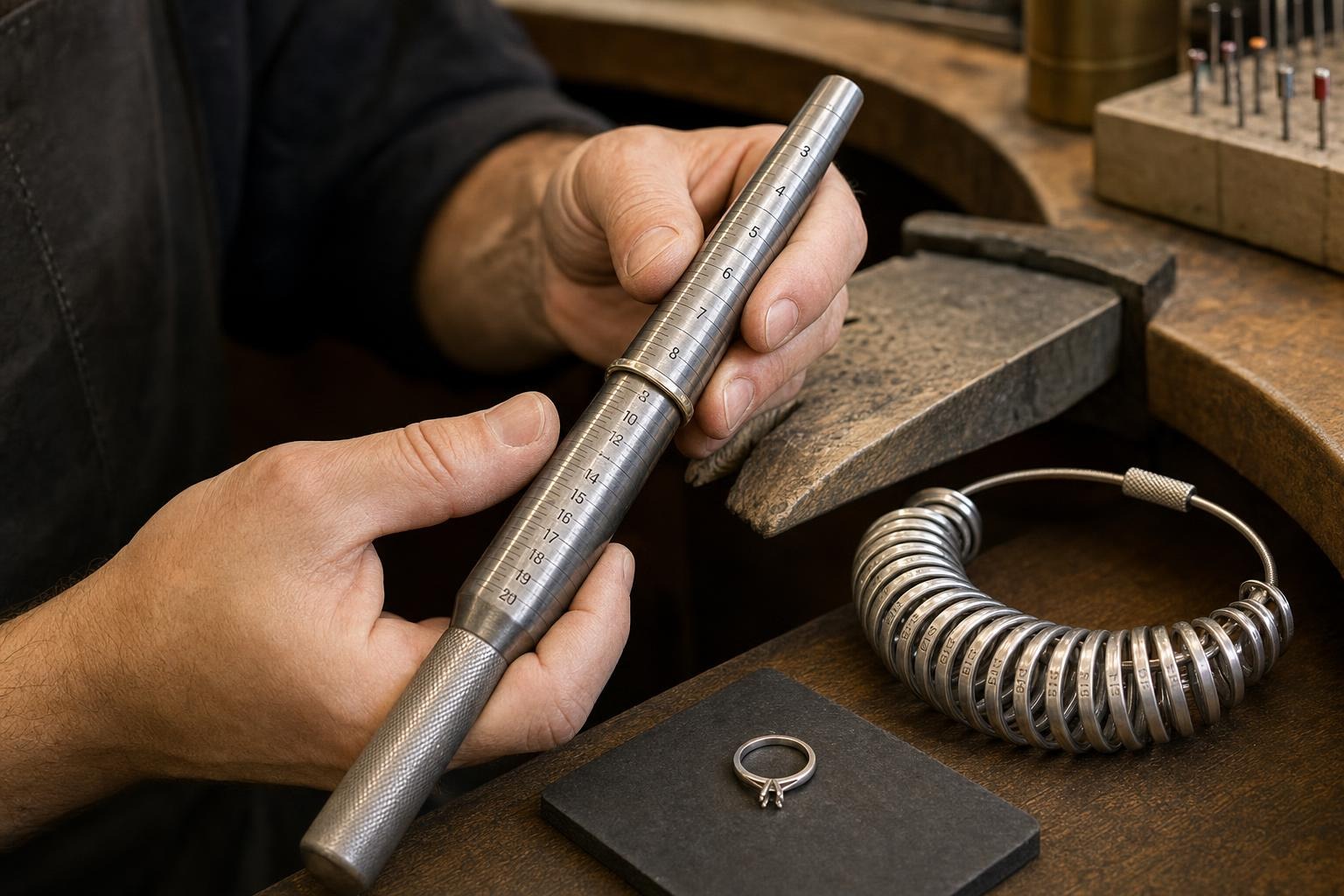
For a ring, do not rely on a guess based on height, clothing size, or a casual comparison with someone else’s hand. Use a ring that fits the correct finger or have the intended wearer measured by a jeweler when possible. Finger size can vary between hands, and a wider band may feel different from a narrow one.
If the piece is a surprise, tell the designer how the size was obtained and whether it is an estimate. Bring a ring worn on the intended finger if you can borrow it discreetly, but do not assume every ring fits every finger equally. Ask what sizing options may be available after completion, especially if the design includes stones around the band or other construction that could make alteration more involved.
For bracelets and necklaces, provide both the body measurement and the preferred finished fit. A necklace length should account for where the pendant is meant to sit, while a bracelet may be close-fitting or intentionally loose. Photographs showing how an existing piece fits can help during an online consultation, ideally alongside an exact measurement taken with a flexible tape.
Lifestyle belongs in the fit discussion as well. Mention frequent glove use, hands-on work, sports, or a preference for jewelry that does not catch on clothing. These details allow the designer to discuss profile, edges, closures, setting protection, and comfort in the context of the actual piece.
Ask questions that reveal the complete process
The first appointment is not only about aesthetics. It is also your opportunity to understand how decisions are documented and when they become final. Custom processes vary by jeweler, so avoid assuming that sketches, renderings, models, deposits, revisions, and production follow a universal sequence.
Useful questions include:
What materials and stone options fit the design?
Ask why a particular metal, stone, setting style, or dimension is being recommended. If you are choosing among platinum, white gold, yellow gold, or rose gold, discuss appearance and practical considerations relevant to the design rather than selecting from color alone.
What will I approve before production begins?
Find out whether you will review a sketch, dimensions, a digital rendering, a model, selected stones, or another form of design documentation. Ask which details the preview represents accurately and which may appear different in the finished piece.
How are revisions handled?
Clarify how many design rounds are included, what counts as a revision, and when changes could affect the quote or delivery date. It is easier to evaluate a concept when you know which choices remain open.
How is the price confirmed?
Ask what the estimate includes and what could cause it to change. Confirm the applicable payment schedule, deposit terms, and the point at which materials or work become noncancelable. These are business-specific policies, so request them directly from the jeweler.
What documentation comes with the piece?
For a certified diamond, ask which grading report will accompany it. You can also ask what purchase records, material details, or care guidance will be provided with the completed jewelry.
Who is my point of contact?
Knowing who will answer design questions reduces confusion, particularly when the project is managed remotely. Confirm the best communication method and how approvals should be recorded.
Know what should happen after the appointment
Before the consultation ends, summarize the decisions made. The jeweler should have enough information to identify the intended style, required fit, budget parameters, deadline, and unresolved choices. You should understand what you need to provide next and what the jeweler will prepare.
Depending on the project, the next step could involve stone selection, a design proposal, measurements, revised pricing, or another review. Ask for a written recap if one is not routinely provided, and compare it with your own notes. Check especially for details that are easy to confuse: metal type and color, stone shape, dimensions, setting orientation, ring size, engraving, finish, and deadline.
When a visual proposal arrives, assess the whole piece before concentrating on tiny details. Look at proportion, balance, profile, and how the design relates to the intended wearer. Then consolidate your feedback into one clear response. Several scattered messages can create ambiguity about which request is current.
Do not approve a design simply because you feel pressure to keep the project moving. Resolve unclear measurements, materials, pricing, or timing first. A thoughtful approval is one of the most effective ways to reduce avoidable revisions later.
Frequently asked questions
Do I need a sketch before meeting a custom jeweler?
No. A rough sketch can help, but labeled reference images and a clear explanation of your priorities are enough to begin. The goal is to communicate the desired look and function, not to solve the technical design yourself.
How many inspiration images should I bring?
A focused set of roughly five to ten references is usually manageable. Remove duplicates and label the specific detail you like or dislike in each image. Quality and consistency matter more than volume.
Should I disclose my full budget?
You should provide a comfortable total range. Without it, the jeweler may develop a concept around stones or details that do not align with what you intend to spend. A range supports a more useful discussion of trade-offs.
Can a remote consultation work for an engagement ring?
Yes, many design discussions can take place through video, email, photographs, and shared measurements. The important questions are how stones will be presented, how sizing will be confirmed, what you will approve, and how the completed piece will be delivered. Confirm the jeweler’s specific remote process before proceeding.
What if I do not know which diamond specifications I want?
Begin with visible preferences: shape, approximate proportions, overall look, and relative priorities. A jeweler can then explain how cut, color, clarity, carat weight, dimensions, and budget interact. Request grading documentation for any certified diamond you are considering.
How far in advance should I begin?
There is no single timeline for every custom project. Complexity, sourcing, approvals, revisions, and production can all affect completion. Start as early as practical, disclose any fixed date immediately, and rely on the jeweler’s written estimate for that specific design.