The best metal and finish for a custom ring depend on more than color. Metal affects the ring’s weight, durability, maintenance, setting security, and cost. Finish changes how the design reflects light, shows scratches, and looks after years of wear.
Start with the intended use. An engagement ring worn daily has different requirements from a wide statement ring reserved for special occasions. Then consider the design itself: stone color, setting style, band width, engraving, and whether another ring will sit beside it. These choices make it easier to compare gold alloys and platinum without treating any one material as universally superior.
DistrictGem offers custom pieces crafted and sourced in New York City’s Diamond District. Buyers considering a custom design can use the following comparisons to identify the specifications they want to discuss before a ring moves from sketch to production.
Key takeaways
- Yellow, white, and rose gold differ because of their alloy mixtures, not only their surface color.
- Platinum is dense, naturally white, and develops a soft patina rather than retaining a mirror finish indefinitely.
- High-polish surfaces emphasize light and form; matte and brushed finishes reduce reflection but can change in high-contact areas.
- White gold is commonly rhodium plated, so its long-term appearance may involve periodic replating.
- Metal sensitivities require the exact alloy composition to be reviewed before production.
Compare yellow, white, and rose gold by alloy—not color alone
Pure gold is too soft for many forms of everyday jewelry, so it is combined with other metals to create a more practical alloy. Karat describes the proportion of gold in that mixture. For example, 18-karat gold is 75% gold, while 14-karat gold contains approximately 58.3% gold.
Those proportions affect color, hardness, weight, price, and how the ring responds to wear. The additional metals matter too. Two rings described as 14-karat white gold can have different alloy recipes and therefore different tones or suitability for a wearer with a metal sensitivity.
The Gemological Institute of America’s overview of gold provides additional background on purity, color, and the use of gold in jewelry.
Yellow gold offers warmth and straightforward color maintenance
Yellow gold combines gold’s natural warmth with alloy metals selected for strength. It complements diamonds with warmer color grades, colored gemstones, vintage-inspired details, and traditional solitaire settings. Because its color runs throughout the material, normal surface wear does not expose a differently colored layer.
Higher-karat yellow gold generally has a richer yellow tone and a greater proportion of pure gold. A lower-karat alloy may be harder, but the actual performance still depends on its formulation and the ring’s construction. A thin band or delicate prongs should not be judged by karat alone.
Yellow gold is a practical choice for buyers who want a warm appearance without the plating commonly associated with white gold. It still scratches and can gradually wear, particularly where two rings rub against each other.
White gold creates a bright look but may require plating
White gold is made by combining gold with white-colored alloy metals. The underlying alloy is often slightly warm or gray rather than the crisp white seen in finished jewelry. A rhodium coating is therefore commonly applied to create a bright, reflective surface.
It works well with colorless diamonds, contemporary settings, and designs in which the metal is intended to recede visually. White prongs can also be paired with a yellow- or rose-gold band, preserving a warm band color while keeping the setting around a diamond visually neutral.
The main trade-off is maintenance. Rhodium plating wears gradually, especially on the bottom of the band and other high-contact areas. Wear rate varies with use, ring geometry, and the wearer’s habits, so there is no reliable universal replating schedule.
Rose gold makes the metal part of the design
Rose gold receives its pink or red tone primarily from copper in the alloy. It can soften the appearance of a geometric ring, reinforce a romantic or vintage direction, or create deliberate contrast with white diamonds.
The strength of the color depends on karat and alloy composition. A subtle blush and a saturated copper-pink should not be assumed to be interchangeable, so evaluate a physical sample when color is central to the design.
Copper-containing alloys may also be unsuitable for some sensitive wearers. Anyone with a known reaction should ask for the complete alloy composition rather than relying on the broad label “rose gold.”
Understand how platinum wears over time
Platinum is naturally white, so it does not need rhodium plating to maintain a white color. It is also dense: two otherwise similar rings can feel noticeably different when one is platinum. Some buyers appreciate that substantial feel, while others prefer a lighter gold ring.
Platinum scratches, despite sometimes being described too simply as the “most durable” option. Its characteristic wear pattern is different from that of gold. Surface marks gradually create a muted gray patina, which many owners value as part of the ring’s character. A high polish can be restored during professional refinishing if a brighter appearance is preferred.
Its density and material behavior make platinum particularly relevant for substantial settings, white-metal designs, and rings expected to be worn for many years. It can also cost more than a comparable gold piece because of the metal, weight, and fabrication requirements. The final comparison should account for the entire design rather than metal price alone.
Choose a finish based on reflection and expected wear
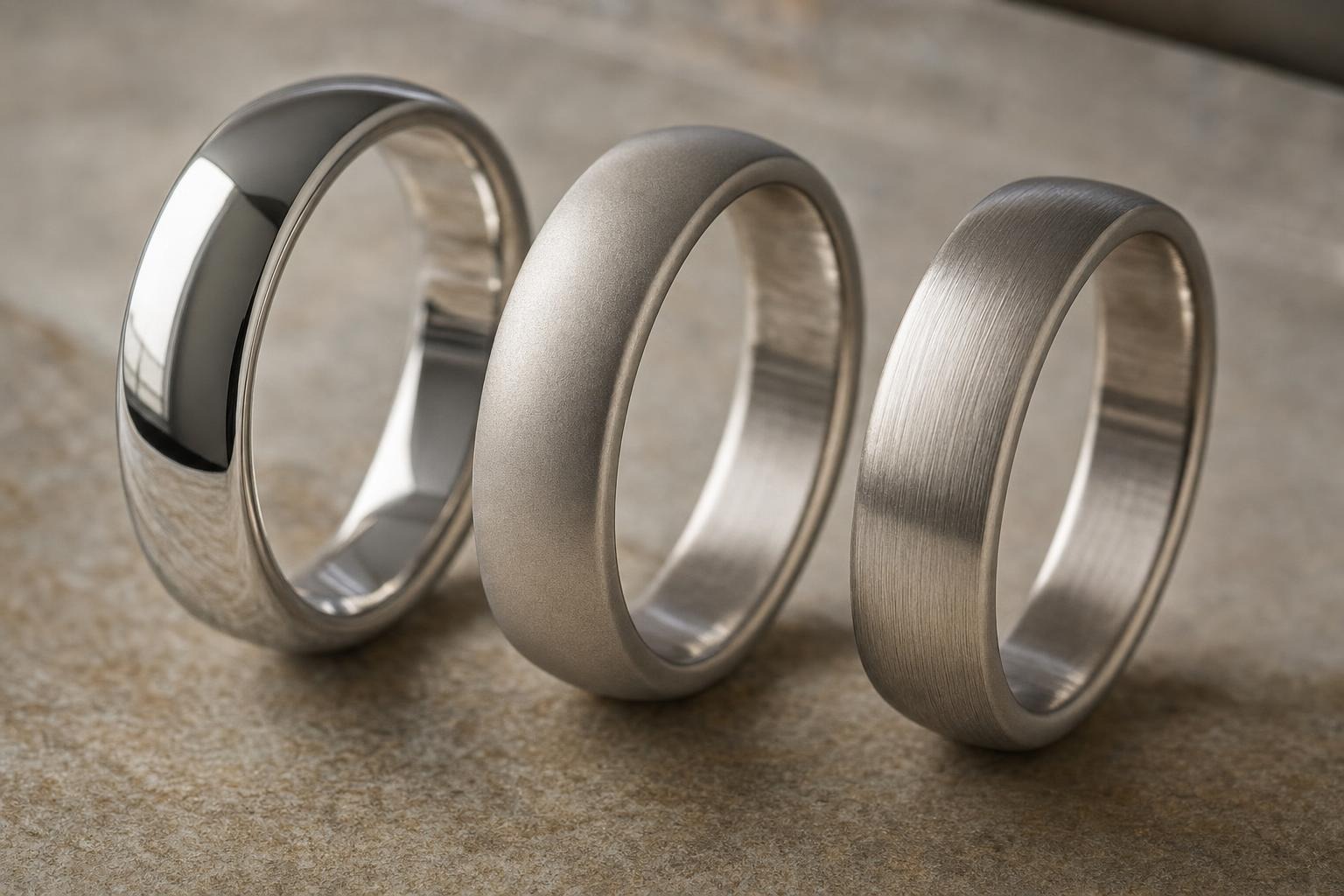
A finish is not merely decorative. It determines how strongly the surface reflects light and how visible fingerprints, scuffs, engraving, and changes from wear will be.
High polish maximizes light and contrast
A high-polish finish creates a smooth, mirror-like surface. It emphasizes curves, crisp edges, and the contrast between bright metal and gemstones. It is a natural fit for classic solitaires, narrow bands, and designs intended to feel formal or refined.
Polished metal can show fingerprints and directional scratches, particularly across broad, flat surfaces. Small marks may be less obvious on a narrow or highly contoured ring because reflections are already broken up by the form.
Matte finishes create a soft, low-reflection surface
Matte finishing diffuses light rather than reflecting a clear image. It can make a wide band feel understated and give a sculptural design a quieter visual character. It also creates contrast when placed beside polished edges, bezels, or accent details.
A matte surface is not maintenance-free. Friction can burnish high-contact areas, making them smoother and shinier over time. Restoring a uniform matte texture generally requires professional refinishing.
Brushed finishes introduce visible direction
A brushed finish has fine lines applied in a controlled direction. The result is less reflective than high polish but more visibly textured than many matte surfaces. It works especially well on broad bands, linear designs, and rings with defined architectural planes.
The direction of the brushing matters. Circumferential lines can follow the band, while lengthwise brushing may emphasize its width. Future scratches that cross the original grain may stand out, although the finish can usually be renewed by a jeweler.
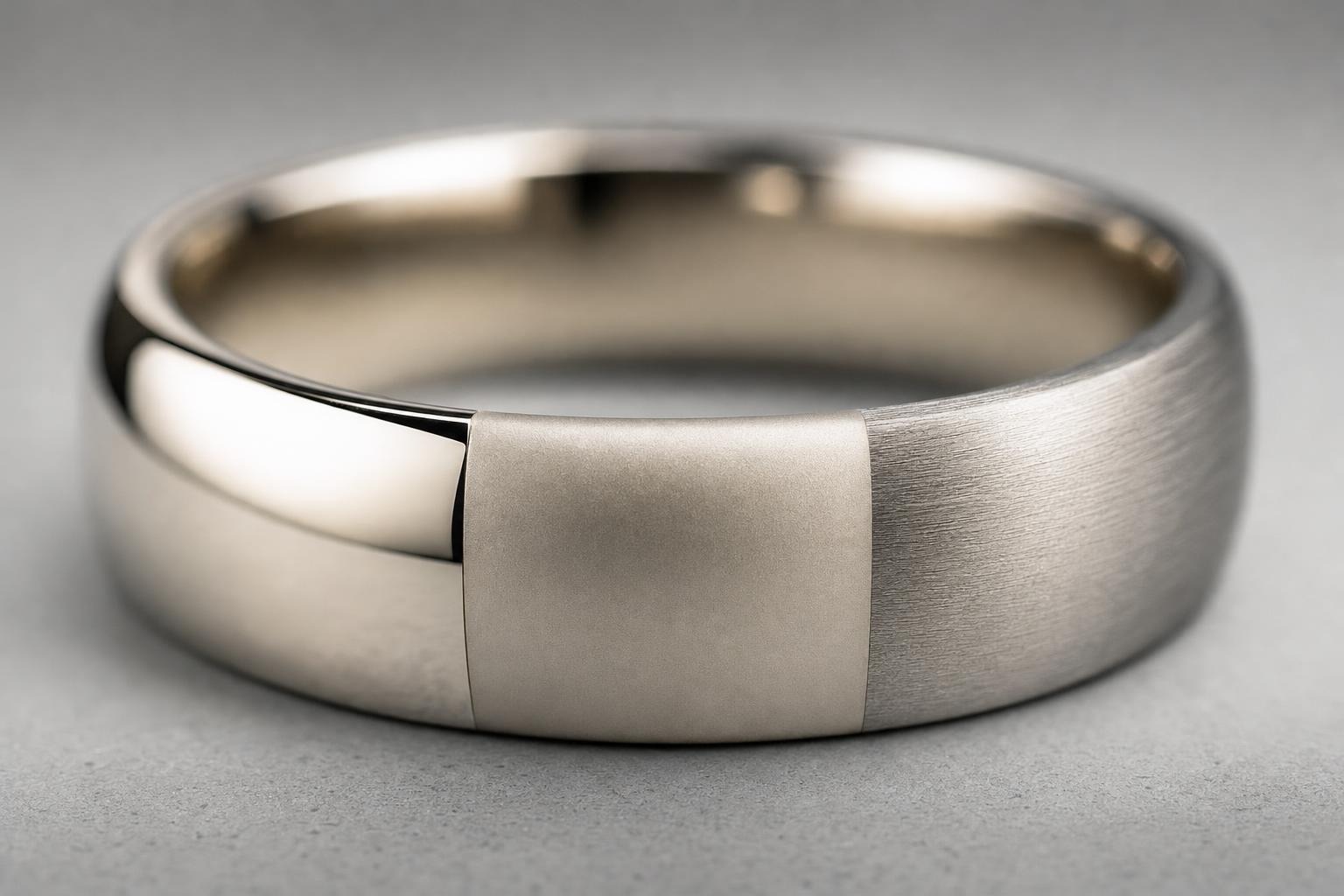
Mixed finishes can clarify a complex design. A matte center with polished borders makes the edges more prominent; a polished bezel against a brushed band draws attention toward the stone. Limit the number of textures unless each one supports a specific part of the design.
Account for rhodium plating before approving white gold
Ask whether the proposed white-gold alloy will be rhodium plated and what the unplated metal looks like. This prevents a common misunderstanding: the initial bright-white appearance may come partly from the surface coating rather than the underlying alloy.
Replating restores the brighter color after the coating becomes thin or uneven. Frequency depends on contact, body chemistry, band shape, and how often the piece is worn. A design with recessed areas may retain plating there longer than on exposed edges, creating visible tonal variation.
Buyers who want white metal without routine plating may prefer to compare platinum with unplated white-gold alloys. These materials do not look identical, so examine them under neutral lighting rather than deciding from edited photography alone.
Verify alloy composition when metal sensitivity is a concern
“Hypoallergenic” should not replace a specific material discussion. Gold color and karat do not reveal every metal in the alloy, and white gold has historically been made with different whitening metals. Rhodium plating may separate the skin from the underlying alloy initially, but wear can eventually expose it.
Tell the jeweler about known sensitivities before the design is finalized. Request the exact alloy composition and discuss platinum or another suitable formulation where appropriate. A jeweler can explain materials, but persistent or serious reactions are a matter for a qualified medical professional.
The U.S. jewelry industry’s rules for describing precious-metal content are available in the Federal Trade Commission’s Jewelry Guides. These standards help buyers understand why accurate metal marking and representation matter.
Match common ring designs with practical combinations
The following combinations illustrate how material and finish can support a design. They are starting points, not fixed formulas.
A classic diamond solitaire
A polished yellow-gold band with white-metal prongs balances warmth with a visually neutral setting around the diamond. An all-platinum version creates a consistently white appearance and greater weight. White gold offers a similar bright direction, with rhodium maintenance included in the ownership plan.
A wide or architectural band
Brushed gold or matte platinum reduces broad reflections and emphasizes form. Polished bevels can define the perimeter without turning the entire surface into a mirror. Because wide bands make more skin contact, fit and alloy sensitivity deserve particular attention.
A vintage-inspired ring
Yellow or rose gold can reinforce milgrain, engraving, and warm antique references. High polish makes detailed edges sparkle, while selective matte recesses can create depth. The finish should not obscure fine decoration or make future restoration unnecessarily difficult.
A ring designed to stack
Consider the neighboring ring before selecting metal and finish. Different metals can wear at different rates where they rub, while a polished sidewall may quickly develop contact marks. Matching metals can simplify the visual relationship, but mixed colors may be intentional when the profiles align safely.
A low-profile bezel setting
Platinum or gold can both support a streamlined bezel design. High polish makes the metal frame more prominent; brushing can make it quieter and more contemporary. The bezel’s thickness, stone shape, and intended protection should be resolved with the metal choice rather than added later.
Make the final decision with samples and a complete specification
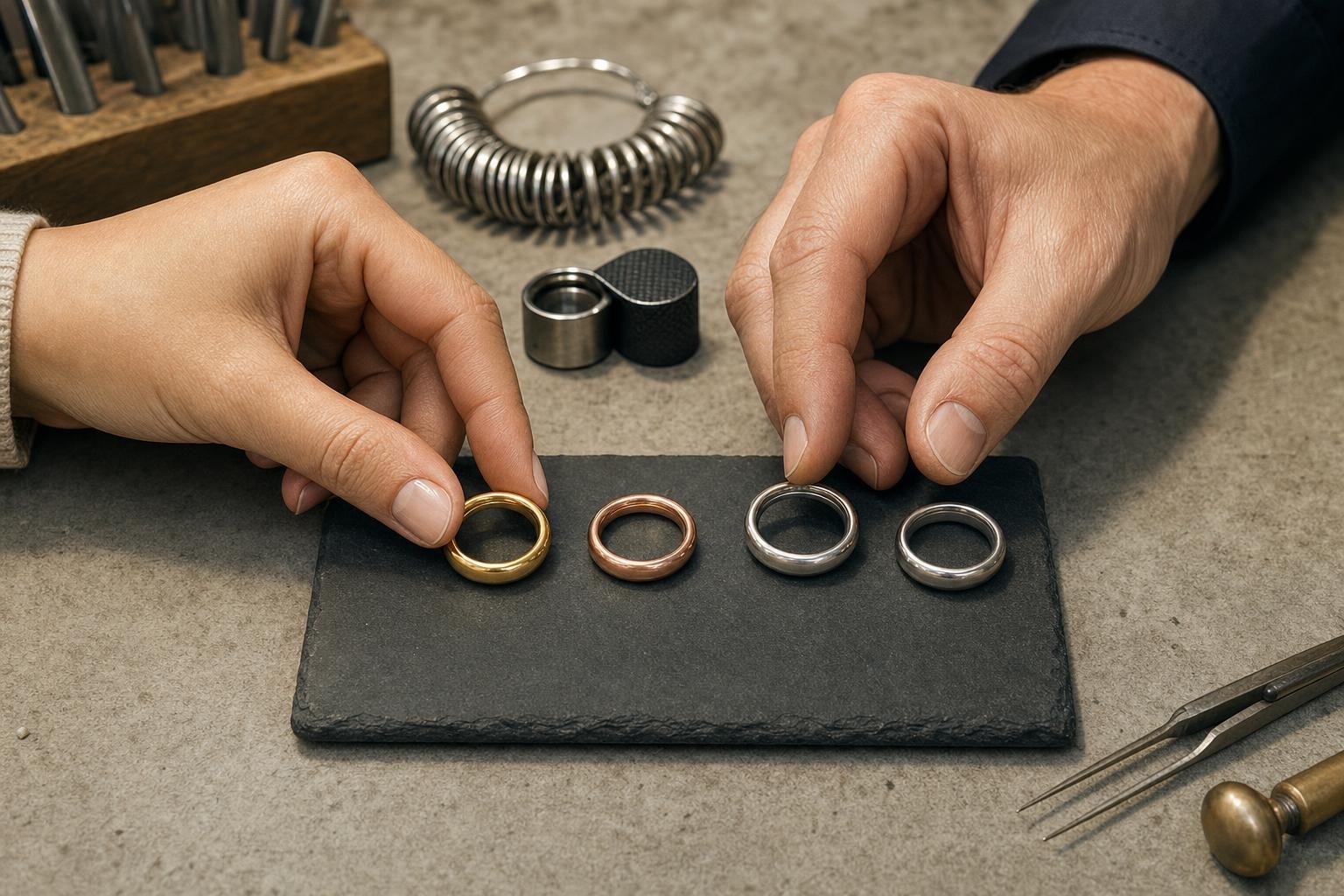
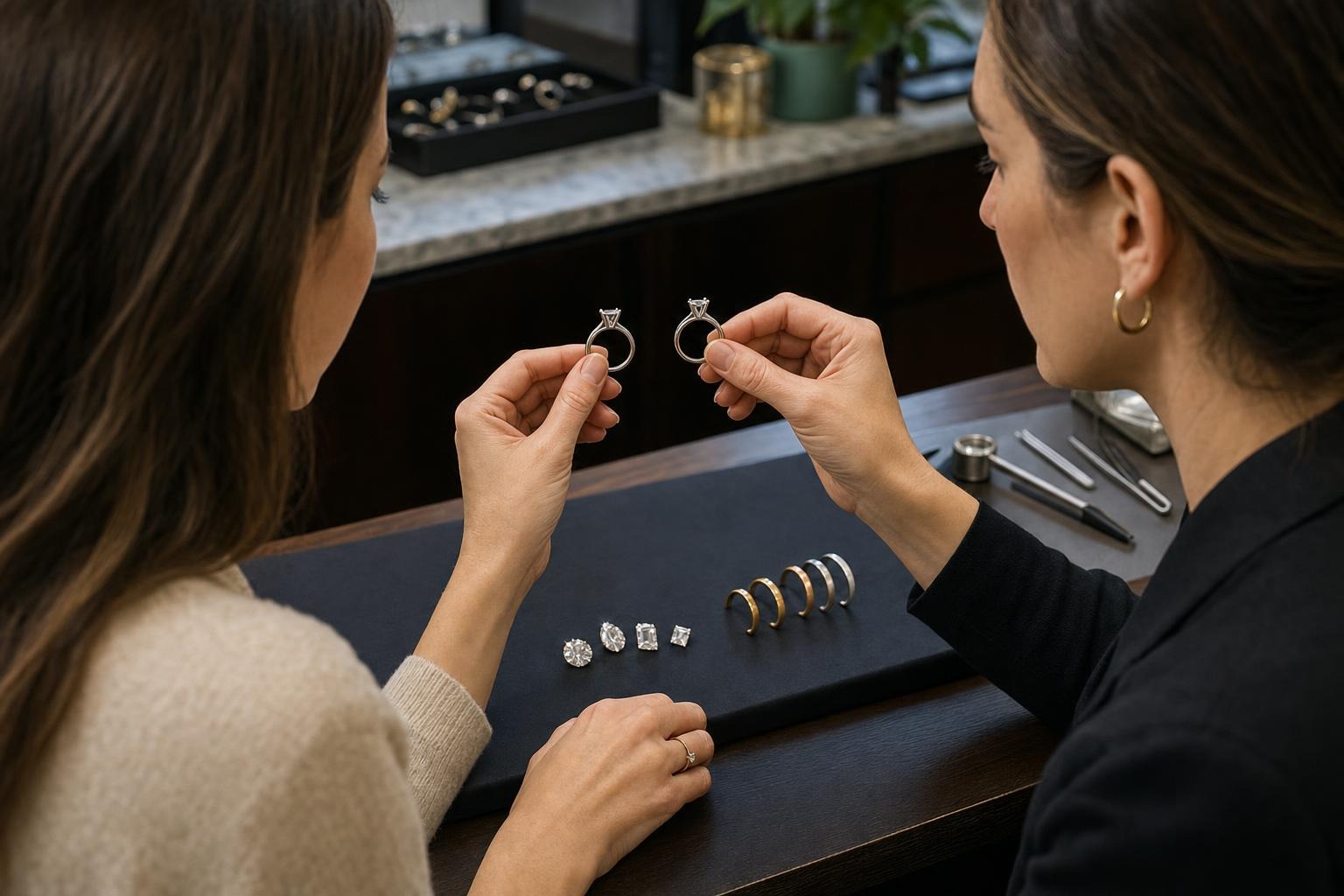
Before approving a custom ring, compare real metal and finish samples in neutral light. Review the proposed karat or platinum fineness, alloy composition, plating, finish direction, band dimensions, setting metal, and interaction with any adjacent ring.
Photographs and sketches establish proportion, but physical samples reveal weight, warmth, reflectivity, and texture. When exploring a piece through DistrictGem, use those observations to define a design that fits both the intended look and the realities of regular wear.
Frequently asked questions
Is platinum always better than gold for a custom ring?
No. Platinum is naturally white, dense, and develops a distinctive patina, but it can be heavier and more expensive. Gold provides more color choices and may better suit a particular design, budget, or preferred weight. Construction and setting quality matter alongside the metal.
Which ring finish hides scratches best?
No finish permanently hides wear. Matte and brushed surfaces can make some small marks less conspicuous, but friction may polish portions of the texture. High polish can show scratches more clearly on broad surfaces, although it is straightforward to refinish professionally.
Does all white gold need rhodium plating?
Not necessarily. Many white-gold rings are plated to produce a brighter white, but alloy color varies. Ask whether a specific piece is plated and inspect the unplated alloy if avoiding future replating is a priority.
Can a custom ring combine two metals?
Yes, when the construction is planned accordingly. Common examples include a yellow-gold band with white prongs or contrasting sections within a wider ring. The designer should account for color, fabrication, future refinishing, and wear where the metals meet.
Should the engagement ring and wedding band use the same metal?
They do not have to, but compatibility matters. Rings worn together can rub along their sides, so profile, hardness, setting details, and finish should be considered as a set. Reviewing both designs together helps prevent unwanted gaps or concentrated contact.